Washington’s cherry blossoms near peak bloom: the 1912 gift, festival origins, and today’s stewardship
Peak bloom window and why it matters each spring
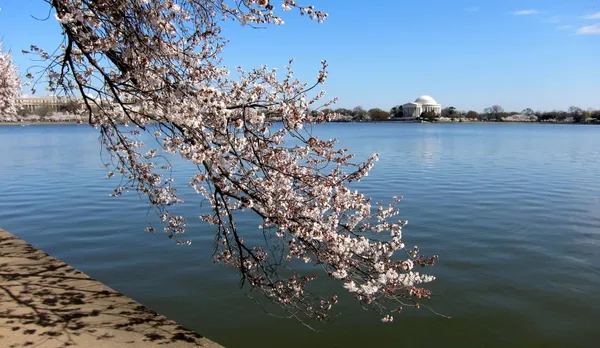
Washington’s best-known cherry trees—clustered around the Tidal Basin and extending through parts of West Potomac Park and the National Mall—are nearing their annual peak bloom, a brief phase when roughly 70% of the blossoms on the featured trees are open. For 2026, the projected peak bloom window for the Tidal Basin’s signature Yoshino cherries is March 29 through April 1, with day-to-day timing still dependent on late-March weather conditions.
How the cherry trees arrived: a story shaped by diplomacy and biosecurity
The cherry blossoms’ presence in the nation’s capital traces back to early 20th-century efforts to beautify the city and strengthen ties between Japan and the United States. A first major shipment of cherry trees sent to Washington in 1910 did not reach the ground: the trees were found to be infested and diseased and were destroyed to prevent the spread of pests. The incident became part of a broader period in which the United States tightened plant import controls, reflecting growing federal concern about agricultural and ecological risks.
A second, successful gift followed. In 1912, Japan sent 3,020 cherry trees to Washington. Two ceremonial plantings that year—carried out by First Lady Helen Herron Taft and the wife of Japan’s ambassador—marked the beginning of what became the capital’s most recognizable spring landscape.
From plantings to an annual festival
Over time, the cherry trees became associated with organized civic celebrations. By the mid-1930s, a cherry blossom festival had taken shape in Washington, and 1935 is widely recognized as the start of the annual event that later evolved into today’s National Cherry Blossom Festival. The modern festival calendar typically spans several weeks and is scheduled to coincide with the bloom season, even as the exact peak can shift year to year.
What visitors see today: variety, scale, and vulnerable shoreline terrain
The core cherry collection in and around the Tidal Basin is commonly described as numbering in the thousands—often cited in the range of roughly 3,700 to 3,800 trees—spread across several areas of the National Mall park system. While the pale-pink Yoshino cherries are the most photographed, other varieties, including Kwanzan and additional cultivars, contribute to staggered bloom times and varied color across the season.
The setting is also environmentally complex. The Tidal Basin’s edge and adjacent parkland have been the focus of major infrastructure work in recent years, including seawall reconstruction intended to address erosion, flooding, and longer-term risks linked to rising water levels and increasingly intense rain events. Such projects can require the removal of some trees and the phased replanting of others, turning the preservation of the cherry canopy into an ongoing stewardship effort rather than a static landmark.
Key dates in the cherry blossoms’ Washington history
- 1910: An initial shipment of cherry trees is found to be infested and is destroyed.
- 1912: Japan’s gift of 3,020 cherry trees is planted in Washington; the ceremonial plantings anchor the tradition.
- 1935: The annual cherry blossom festival is established as a recurring civic event.
- 2026: Peak bloom at the Tidal Basin is projected for March 29–April 1.
Peak bloom is defined as the period when 70% of the blossoms of the Yoshino cherry trees are open.