Unidentified drones over Fort McNair trigger heightened security planning as U.S.-Iran hostilities intensify
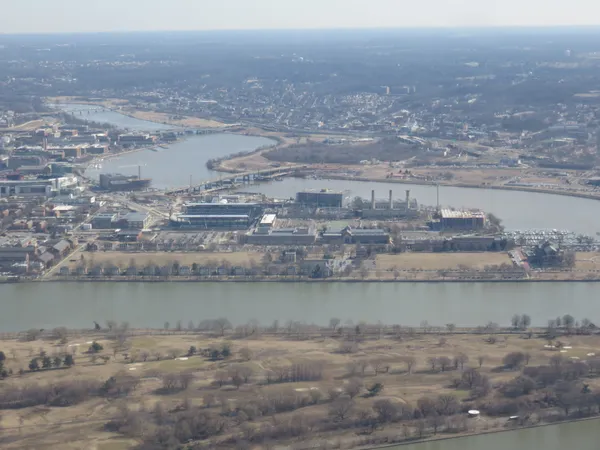
Drones reported over a restricted installation in Washington
U.S. security officials detected multiple unidentified drones flying over Fort Lesley J. McNair in Washington, D.C., in recent days, prompting a security review at one of the capital’s most sensitive military installations. Fort McNair, located at the confluence of the Potomac and Anacostia rivers, hosts the National Defense University and includes secured housing used by senior government officials.
The incursions were treated as more than routine airspace violations because they occurred amid elevated concerns about retaliation tied to the expanding U.S.-Iran conflict overseas. The drones’ operators were not publicly identified, and authorities have not released technical details such as the number of aircraft involved, flight paths, altitudes, or whether the drones carried cameras or other payloads.
Protective measures considered for senior officials
The drone activity triggered internal discussions about additional protective steps for officials who reside on or are frequently present at Fort McNair, including the Secretary of Defense and the Secretary of State. Officials have not publicly confirmed whether any relocations occurred, and the Defense Department has declined to provide details about protective movements, citing operational security.
Separately, the incidents prompted additional interagency coordination on potential response options. Federal authorities have broad responsibilities for protecting the National Capital Region, but counter-drone actions are constrained by a complex division of legal authorities governing detection, identification, and mitigation in domestic airspace.
Why drones are difficult to attribute quickly
Small unmanned aircraft can be purchased and operated with minimal footprints, and attribution can be challenging even when a drone is visually observed. In restricted areas, unauthorized flights may stem from operator error, deliberate intrusion, or attempts to probe security measures. In past incidents nationwide, investigations have also found that some widely shared “drone” reports involved misidentified aircraft or other aerial objects, complicating rapid public characterization of events.
Broader counter-UAS posture in the National Capital Region
Fort McNair sits within one of the most tightly controlled airspaces in the United States, where layered restrictions are designed to protect federal facilities and national leadership. The new drone reports arrive as federal agencies have been expanding training, procurement and coordination efforts to improve detection and response to unmanned aerial systems, including preparations for high-profile events and heightened security periods.
- Authorities have not disclosed the drones’ origin, intent, or operator identity.
- No public information has been released indicating damage or injuries linked to the flights.
- Officials have emphasized that details about protective movements and response tactics are typically withheld to avoid revealing vulnerabilities.
In recent years, security agencies have increasingly treated unauthorized drone incursions near military facilities as potential intelligence-gathering attempts until proven otherwise.
For residents across the Washington region, the episode underscores how rapidly overseas conflict dynamics can reshape domestic security posture—particularly in airspace surrounding military sites and senior government leadership facilities.