Trump-era downsizing accelerates Education Department’s Washington footprint shift as headquarters operations consolidate across fewer buildings
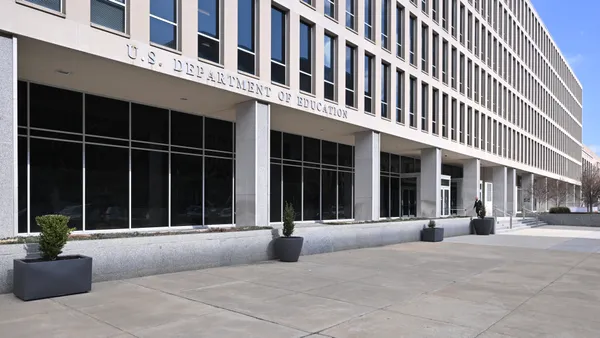
A smaller department, a changing real-estate footprint
The U.S. Department of Education is reshaping how it uses office space in Washington, D.C., as it operates with a markedly reduced workforce and continues a multi-year effort to consolidate staff into fewer locations. The department’s long-standing headquarters presence remains centered on the Lyndon Baines Johnson (LBJ) federal building at 400 Maryland Ave. SW, but internal space planning and facility work have been aimed at shrinking the overall footprint and reducing reliance on scattered leased offices.
The consolidation effort has been intertwined with a broader push to reduce staffing levels and reorganize functions. In 2025, the Trump administration advanced plans to dismantle major elements of the department, including large-scale layoffs that targeted roughly half of the agency’s workforce. Court action later allowed the administration to proceed with a plan affecting nearly 1,400 employees, reinforcing a trajectory toward a smaller operational base.
How consolidation works inside a federal headquarters
The department’s Washington operations historically occupied parts of several buildings. Recent space plans have focused on concentrating more employees in the LBJ building—where the Secretary’s office is located—while using at least one additional leased site to accommodate remaining staff. Federal facility modernization at LBJ has been framed as enabling more employees to work in the headquarters building, while permitting the termination or avoidance of other private-sector leases.
- The department’s core headquarters address remains the LBJ building on Maryland Avenue SW.
- Consolidation plans have contemplated reducing the number of separate Washington properties used for day-to-day operations.
- Modernization work inside LBJ has been used to support denser occupancy and reconfigured workspaces.
Return-to-office deadlines and logistical pressure
The space changes have also been influenced by federal return-to-office requirements. Department timelines in 2025 set milestones for bringing employees back to their designated duty stations following building renovations and relocation arrangements. That operational clock—combined with reductions in headcount—has created pressure to align available desks, secure spaces, and technology with a reorganized workforce.
In practical terms, consolidation is both a facilities project and a workforce-management issue: fewer employees and fewer offices reduce costs, but transitions can create short-term disruption as workgroups are relocated and space is reconfigured.
What it means for Washington—and what remains uncertain
For Washington, D.C., the department’s real-estate decisions are part of a wider federal trend of reassessing office needs, especially leased space. However, the Education Department’s situation is unusual because its space plans are occurring alongside policy-driven restructuring and potential program transfers to other agencies. While headquarters functions are still anchored in the District, the long-term scale of Education Department operations in Washington depends on how far the administration’s reorganization proceeds and what actions Congress ultimately takes regarding the department’s statutory responsibilities.
In the near term, the measurable change is the department’s shrinking workforce and an associated drive to operate from a tighter set of Washington facilities—an approach designed to match space to staffing after a period of rapid institutional contraction.