Total lunar eclipse March 2–3 brings Washington a pre-dawn Blood Moon, last until June 2029
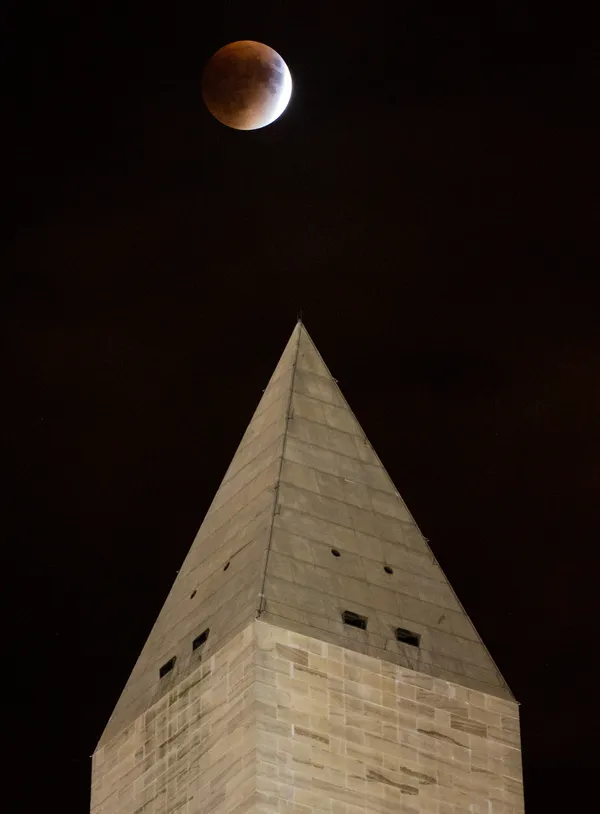
A total lunar eclipse will unfold overnight into Tuesday morning, with Washington-area visibility near dawn
A total lunar eclipse—often called a “Blood Moon” because the Moon can take on copper and red tones—will occur overnight Monday into Tuesday, March 2–3, 2026. For observers in Washington, D.C., the event is scheduled for the pre-dawn hours, with the most visually striking phase arriving close to sunrise and the Moon’s descent toward the western horizon.
Lunar eclipses happen when the Moon passes through Earth’s shadow. Unlike solar eclipses, which are only visible along narrow paths, a lunar eclipse can be seen from anywhere the Moon is above the horizon during the event—weather permitting.
Key timings for Washington, D.C., and what viewers are likely to notice
The eclipse begins subtly as the Moon enters Earth’s outer shadow, then becomes more obvious during the partial phase as a dark “bite” appears. Totality begins shortly after 6 a.m. Eastern time, when the entire Moon is inside Earth’s umbra (its darkest shadow). In the Washington area, totality is expected to be in progress around sunrise, with the Moon low in the sky, which can limit how long the fully eclipsed Moon remains visible.
- Penumbral phase begins: about 3:44 a.m. ET (March 3)
- Partial phase begins: about 4:50 a.m. ET
- Totality begins: about 6:04 a.m. ET
- Totality ends: about 7:03 a.m. ET
Local factors—cloud cover, haze, and an unobstructed western view—will play an outsized role in how much of the total phase can be seen from the District and nearby suburbs.
Why the Moon turns red during a total lunar eclipse
During totality, Earth blocks direct sunlight from reaching the Moon. However, some sunlight is bent through Earth’s atmosphere and filtered before it reaches the lunar surface. Shorter blue wavelengths are scattered more efficiently, while longer red and orange wavelengths pass through more readily—similar to the colors seen at sunrise and sunset. The result can be a reddish Moon, with the exact shade influenced by atmospheric conditions such as clouds and dust.
During totality, the Moon is lit primarily by sunlight that has passed through Earth’s atmosphere, which favors red and orange wavelengths.
How to watch safely and what equipment helps
No special eye protection is required for a lunar eclipse. The event is safe to watch with the naked eye. Binoculars can make the edge of Earth’s shadow easier to see during the partial phase and bring out more color and surface detail during totality. A tripod-mounted camera can capture the dimmer, reddened Moon more reliably than handheld shots, especially as the Moon nears the horizon.
Why this eclipse stands out on the calendar
This is the only total lunar eclipse expected in 2026, and the next total lunar eclipse after this one is scheduled for late June 2029. While lunar eclipses are not rare on an astronomical timescale, the combination of totality, broad visibility across the Americas, and the multi-year gap to the next total eclipse makes the March 2–3 event a notable skywatching opportunity for the Washington region.

Sunlight and Accountability: Your D.C. Morning Briefing for March 5
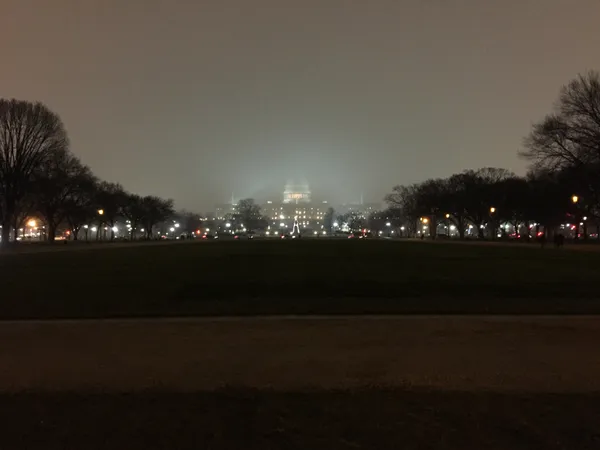
Foggy Mornings and Midnight Puddles: D.C.’s Rollercoaster Thursday Forecast
Fog and damp roads slow Thursday morning commutes in Washington as visibility drops across the region