Ten-foot golden toilet sculpture appears near Lincoln Memorial, spotlighting political satire and public-space permitting issues
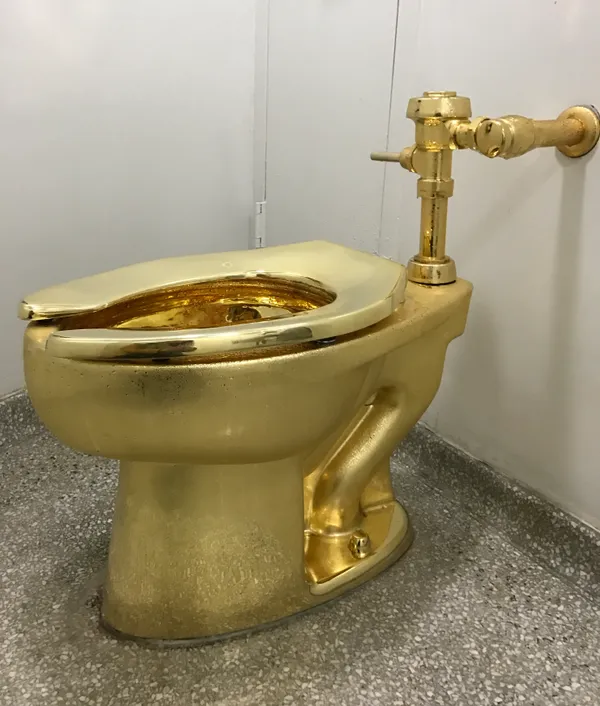
A new installation draws attention on the National Mall
A ten-foot-tall golden toilet sculpture appeared Monday, March 30, 2026, in the area of the Lincoln Memorial, introducing a conspicuous new piece of political-themed public art to one of Washington’s most heavily visited federal landscapes.
The work is titled “A Throne Fit For A King” and includes a plaque with text framing the installation as a satirical reference to recent headlines about renovations connected to President Donald Trump, including changes described publicly as involving the “Lincoln Bathroom.” The plaque’s message links the renovation theme to broader national conditions, presenting the sculpture as commentary delivered in the visual language of spectacle.
What is known about who placed it
The sculpture has been attributed to an anonymous artist collective using the name “The Secret Handshake.” Public statements circulating with the installation identify the group as responsible and indicate the work is intended to remain on site for several days. The collective has also been associated with other temporary, politically focused installations that have appeared on or near the National Mall in recent months.
Why the location matters
The Lincoln Memorial grounds occupy a distinctive place in the U.S. capital: they are both an iconic commemorative setting and a central venue for demonstrations and expressive activity. Because the area sits within federally managed parkland, the appearance of any large structure raises questions that extend beyond art or politics to include compliance with federal rules governing public assembly, temporary structures, and the protection of memorial resources.
Large-scale objects installed in or near the memorial complex typically require coordination that can include permits, restrictions on how close structures may be placed to monuments, and safety planning for crowds, sightlines, and access. The emergence of a sizable sculpture without advance public notice can therefore prompt scrutiny about how it was transported, installed, and secured, and under what authorization it is occupying space.
How the installation fits a wider pattern
Washington has seen recurring episodes of pop-up political art that uses recognizable imagery and short-lived placements to generate rapid public attention. These works often rely on the National Mall’s role as a civic commons, but they also test the boundary between protected expression and rules designed to manage a high-traffic, symbolically sensitive environment.
- Object and scale: a large, gold-colored toilet sculpture presented as a stand-alone monument-style installation.
- Message delivery: a plaque that provides an explicit narrative tying the work to contemporary political events.
- Timing and duration: installed March 30, 2026, with indications it is planned to remain only for several days.
The installation’s plaque frames the piece as an intentionally ironic “tribute,” using the language of commemoration to communicate satire.
What to watch next
Key developments are likely to involve whether federal land managers confirm a permit status for the work, how long it is allowed to remain, and whether additional security or crowd-control measures are introduced around the site. The response will help clarify how authorities are applying public-space rules to short-term political installations in core memorial areas.