Rev. Jesse Jackson’s legacy in Washington: from civil rights marches to national politics and coalition-building
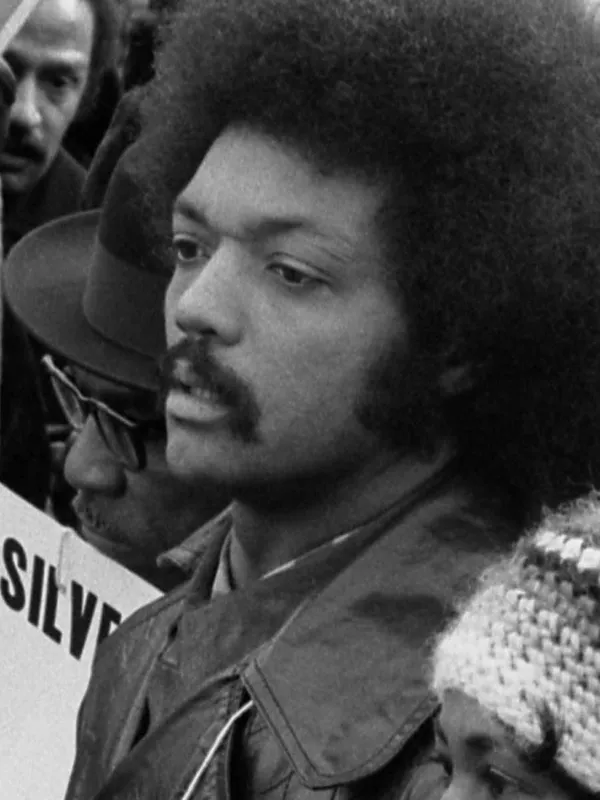
A national figure with deep ties to Washington’s public square
The Rev. Jesse L. Jackson, a minister and civil rights leader who became a major voice in Democratic politics, died on Feb. 17, 2026, at age 84. His decades-long career repeatedly intersected with Washington, D.C.—as a stage for mass protest, a center of federal power, and a focal point for coalition politics.
Jackson’s public profile grew out of the modern civil rights movement and later expanded into national electoral politics and issue advocacy. In the Washington region, his legacy is best understood through several recurring roles: participant in the capital’s landmark demonstrations, organizer and ally in political mobilization, and advocate for economic and voting-rights agendas aimed at influencing federal policy.
Washington as a recurring site of movement politics
Washington’s National Mall and nearby civic spaces served as a recurring venue for major civil rights-era gatherings that helped define the movement’s national narrative. The March on Washington for Jobs and Freedom on Aug. 28, 1963, drew more than a quarter million participants and is widely recognized as a catalytic moment for subsequent civil rights legislation.
In 1968, the Poor People’s Campaign brought protesters to Washington to press for economic justice for poor Americans of diverse backgrounds, seeking federal action on poverty and inequality. The campaign unfolded in the wake of the assassination of the Rev. Martin Luther King Jr., with leadership continuing under the Southern Christian Leadership Conference.
From the Mall to the ballot box
Jackson later became one of the most prominent Black candidates to seek the Democratic presidential nomination, running in 1984 and again in 1988. Those campaigns helped broaden participation in presidential primaries and elevated a platform that linked civil rights to economic opportunity and voter engagement—issues often directed at federal decision-makers in Washington.
His influence also extended beyond election cycles through advocacy and organizing infrastructure. The nonprofit organization that combined Operation PUSH and the National Rainbow Coalition—merged in the 1990s—established a national headquarters in Chicago and developed regional branches, including in Washington, reflecting an ongoing strategy of maintaining a presence near federal institutions and national media.
High-profile Washington demonstrations in the 1990s
Jackson appeared among the prominent speakers at the Million Man March on Oct. 16, 1995, a large gathering on and around the National Mall that drew national attention to themes of civic responsibility, community renewal, and political participation. The event also generated debate over its framing and leadership, while underscoring Washington’s role as the principal venue for nationally visible mass mobilizations.
1963: Participation in a landmark mass demonstration for jobs and civil rights in Washington.
1968: Continued movement-era pressure on federal policy through the Poor People’s Campaign in Washington.
1980s: Two presidential campaigns that helped reshape coalition politics inside the Democratic Party.
1995: Public presence at a major National Mall gathering with nationwide political reverberations.
Across multiple eras, Washington functioned as a central arena where Jackson’s movement work, political ambitions, and policy demands converged.
In the Washington area, Jackson’s legacy is inseparable from the capital’s dual identity: a city of protest and a city of power. His repeated appearances in Washington’s defining civic spaces—alongside sustained political organizing—helped connect grassroots mobilization to the federal government’s agenda-setting machinery.