President Donald Trump Returns to the White House After Mar-a-Lago Weekend as Washington Awaits Next Steps
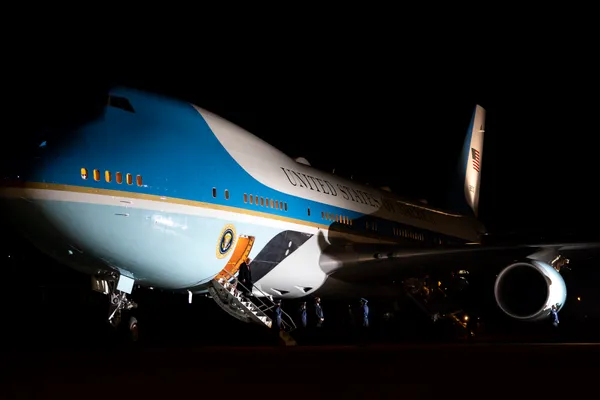
Arrival at the executive residence follows a familiar presidential travel pattern
U.S. President Donald Trump arrived at the White House in Washington, D.C., on Feb. 1, 2026, returning from a weekend at his Mar-a-Lago estate in Florida. He did not take questions from reporters upon arrival, a common feature of brief White House arrival moments that often serve primarily as a visual marker of the president’s movements rather than a venue for policy announcements.
The return comes as the White House manages a heavy mix of domestic administration and intergovernmental engagement that frequently converges on the executive complex, where official meetings, briefings and coordination with federal agencies are centered. While the arrival itself carried no immediate public statements, it occurred within a broader context of active policy and political disputes playing out in the Washington region and beyond.
Regional governance disputes keep federal-local coordination under scrutiny
In recent days, the administration has been involved in a public dispute with Maryland’s governor over the response to a major sewage spill affecting the Potomac River. The incident stems from a January rupture in an aging interceptor pipe operated by the District’s water utility under federal environmental oversight. Authorities have emphasized that drinking water remains safe while urging the public to avoid contact with affected river water during the response and repair work.
Episodes like this place operational focus on the federal agencies responsible for environmental enforcement and on the practical coordination required among neighboring jurisdictions that share waterways and infrastructure. They also elevate the White House’s role as a political focal point, where responsibility and accountability are debated alongside technical remediation plans.
White House construction plans add a second, separate line of attention
The president’s return also comes amid continued attention on plans for a major White House expansion project centered on a proposed ballroom. The initiative has been described as privately funded, with questions raised publicly about legal and oversight issues associated with major structural changes on the White House complex. A court ruling has been anticipated in litigation over whether congressional approval and funding authority are required for such work.
Because the White House grounds are both a historic site and the seat of the executive branch, large-scale projects typically draw scrutiny that blends preservation concerns, security requirements, and federal procurement and authorization rules.
What the public can observe—and what remains undisclosed
Public arrivals at the White House are often tightly managed, with limited opportunities for extended questioning. When a president declines to take questions, the immediate public record of the moment is typically limited to the confirmed time and place of arrival and the broad outline of travel.
- Date and location: Feb. 1, 2026, White House, Washington, D.C.
- Travel context: Return from a weekend in Florida.
- Press access: No questions taken during the arrival.
Arrivals and departures can be routine, but they often coincide with decisions and disputes that shape the next week’s agenda in Washington.
With the president back at the White House, the next signals for the public are expected to come through scheduled appearances, formal statements, and agency actions rather than from the arrival itself.