Potomac River sewage spill repairs extended after rock blockage discovered inside collapsed Potomac Interceptor pipe
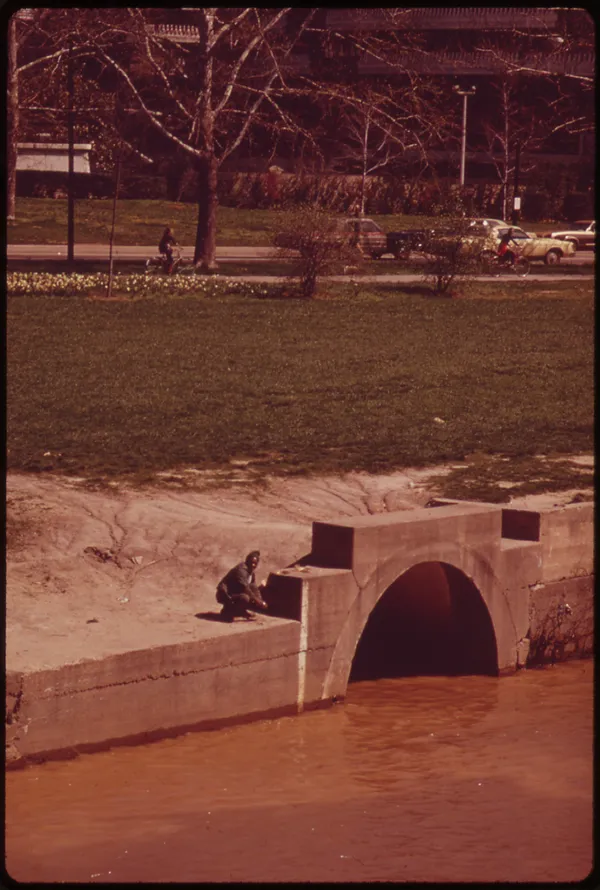
Repairs now expected to take 4–6 additional weeks as crews redesign bypass and remove boulders
Repair work on a major sewer-line collapse that has been discharging wastewater toward the Potomac River is expected to take several weeks longer after engineers discovered a substantial rock blockage inside the damaged pipe.
The failure occurred on January 19, 2026, along Clara Barton Parkway near the I-495 interchange and the C&O Canal National Historical Park in Montgomery County, Maryland. The damaged infrastructure is a 72-inch section of the Potomac Interceptor, a large transmission pipe installed in the 1960s that carries wastewater to the region’s treatment system. Initial estimates indicated the rupture was releasing roughly 40 million gallons of wastewater per day into a creek bed that drains to the Potomac.
Crews moved to limit environmental impact by installing a temporary bypass system designed to redirect flow around the collapse. Excavation, ground stabilization and shoring were undertaken to safely access the pipe and prevent further erosion at the site. The response included continuous work to assess the damage, mobilize heavy equipment and remove debris associated with the collapse.
During a closed-circuit camera inspection conducted overnight, engineers identified a large rock dam inside the collapsed pipe, beginning roughly 30 feet downstream from the failure point and extending for approximately 30 feet. The discovery prompted a reassessment of the repair approach, as the obstruction limits cleaning and constrains the ability to restore full capacity through the interceptor.
The newly identified blockage requires a larger pumping and stabilization setup before heavy machinery can safely remove rocks and boulders from within the line.
The revised plan calls for additional time—estimated at four to six weeks—to establish a new configuration with larger bypass pumps in a different location and to stabilize the work zone for rock removal. Only after the obstruction is addressed can crews proceed with cleaning, full flow restoration and final pipe repairs.
What is known about overflow conditions and public safety
Officials have emphasized that the region’s drinking water remains safe and unaffected because drinking water and wastewater systems are separate, and the incident occurred downstream of the Washington Aqueduct’s drinking water intakes. Even with bypass pumping in place, authorities have continued to caution the public and pets to avoid contact with affected river areas while repairs and monitoring continue.
- Location: Clara Barton Parkway area near the I-495 interchange, adjacent to the C&O Canal National Historical Park
- Asset: 72-inch Potomac Interceptor segment, installed in the 1960s
- Timeline: Collapse on January 19, 2026; camera inspection in early February revealed the rock obstruction
- Updated schedule: 4–6 weeks of added work to deploy additional pumping capacity and enable removal of rocks and boulders
Once the overflow is fully contained and the damaged pipe repaired, further assessment is expected to determine what remediation is needed in areas impacted by the discharge.