Pentagon planning documents outline possible D.C. National Guard mission through 2029 amid legal disputes
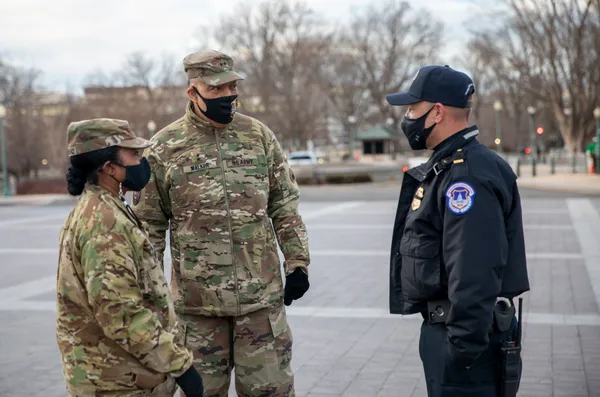
Pentagon weighs multi-year posture for Guard support in the nation’s capital
The Pentagon is examining options that could keep National Guard forces supporting security operations in Washington, D.C., through 2029, according to accounts of internal planning reviewed by multiple national outlets in recent months. The discussions come as the existing mission—initiated in August 2025 after a presidential emergency declaration focused on public safety—has already been extended into 2026, with troops performing a mix of patrol support and public-service assignments across the District.
The current deployment is organized under Joint Task Force–District of Columbia (JTF-DC), a command structure tied to the broader National Capital Region defense architecture. The mission has included a visible Guard presence at transit hubs and federal spaces, alongside activities described in official materials as support functions rather than routine civilian policing.
Timeline: from 2025 activation to extensions into 2026
August 2025: The District of Columbia National Guard was activated to support local and federal law enforcement following an emergency declaration.
Late 2025 to early 2026: Orders were extended beyond initial time frames; reporting has described subsequent extensions running through 2026.
2026 planning: Separate reporting indicates Pentagon planning has included scenarios for maintaining elements of the mission for several years, potentially as far as 2029.
Legal challenge centers on limits of military involvement in domestic law enforcement
The District’s government has contested the deployment in federal court, arguing the ongoing mission infringes on local authority and risks normalizing military involvement in domestic law enforcement. A federal judge ruled in late 2025 that the deployment was unlawful, while also pausing the practical effect of the decision to allow time for appeals, setting up a continuing legal fight over federal authority, Guard status, and the boundaries of permissible support activities.
The court dispute has turned on whether the mission’s day-to-day activities amount to law enforcement, and what constraints apply when Guard forces operate under different legal authorities.
Force structure and costs remain central questions
Public reporting has placed the deployed force in the low thousands at various points, drawing personnel from the D.C. National Guard and additional units from states. Cost estimates for similar domestic missions have reached into the hundreds of millions of dollars nationally, while precise, mission-specific totals for Washington have not been consistently itemized in public budgeting.
At the same time, planning has included efforts to professionalize and formalize the capital-focused mission, including discussion of specialized units and training for rapid response and public-order support. Those steps, if sustained, would represent a shift from short-term surge deployments toward a standing operational posture in the capital region.
What comes next
Any move from internal planning to a defined multi-year mission would likely hinge on the outcome of ongoing litigation, the durability of the emergency rationale used to justify continued deployments, and congressional oversight of funding and authorities. For now, the Guard presence in Washington remains extended into 2026 while the courts consider the District’s challenge and the federal government’s response.