One year after Flight 5342 crash, investigations, airspace restrictions, and memorial plans near Reagan National
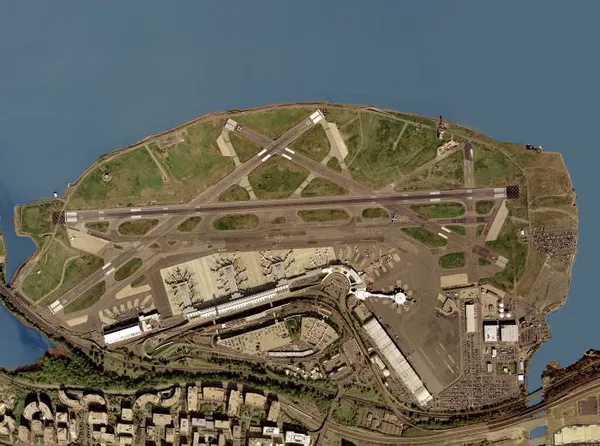
A year after the Potomac River collision
One year after the Jan. 29, 2025, mid-air collision over the Potomac River near Ronald Reagan Washington National Airport (DCA), federal investigators have issued urgent safety recommendations, aviation regulators have tightened helicopter access to key corridors, and families and first responders continue to mark the loss of 67 people.
The crash involved American Airlines Flight 5342, operated by PSA Airlines with a Charlotte-based crew, and a U.S. Army UH-60L Black Hawk helicopter. All aboard both aircraft were killed. The four Flight 5342 crew members were identified as Captain Jonathan Campos, First Officer Samuel Lilley, Flight Attendant Danasia Elder, and Flight Attendant Ian Epstein.
Where the investigation stands
The National Transportation Safety Board (NTSB) has conducted a series of public-facing steps typical of major aviation investigations, including releasing preliminary findings and holding fact-gathering proceedings. A three-day investigative hearing was held July 30 through Aug. 1, 2025, focused on obtaining testimony and technical information about the circumstances leading to the collision.
On Jan. 27, 2026—two days before the one-year anniversary—the NTSB held a public board meeting to determine probable cause and to vote on safety recommendations intended to reduce the likelihood of similar accidents. The investigation materials also highlight broader systemic safety issues around mixed helicopter and commercial aircraft operations in the congested airspace surrounding DCA.
Safety changes: helicopter routes and operating rules
In March 2025, the NTSB issued urgent recommendations targeting helicopter traffic near DCA when certain runway configurations are in use. The recommendations called for prohibiting helicopter operations on a portion of Helicopter Route 4 between Hains Point and the Wilson Bridge when Runway 15 is used for departures and Runway 33 is used for arrivals, and for establishing an alternative route when that segment is closed.
Subsequent FAA actions made major restrictions permanent, narrowing helicopter access near the airport to essential operations such as presidential transport, law enforcement missions, and lifesaving medical flights. The FAA also moved to reduce reliance on “visual separation” procedures—an approach that can shift responsibility for avoiding traffic to pilots under specific conditions—after the crash raised questions about how those instructions were communicated and executed in real time.
Memorials and the community response
Plans have also moved forward for public remembrance. In Alexandria, Virginia, local and federal officials announced a memorial bench to be placed in Rivergate City Park, near the Potomac and a short distance from the crash area. The memorial is expected to include plaques listing the names of the 67 victims.
The collision prompted a large-scale search and recovery operation in the Potomac, with responders continuing to describe the event as a lasting professional and personal trauma.
Key dates and developments
Jan. 29, 2025: Collision over the Potomac River near DCA; 67 fatalities.
March 2025: NTSB issues urgent recommendations on helicopter operations near DCA, including Route 4 restrictions.
July 30–Aug. 1, 2025: NTSB conducts a three-day investigative hearing.
Jan. 27, 2026: NTSB holds a public board meeting to determine probable cause and vote on safety recommendations.
With the NTSB’s probable-cause determination and voted recommendations now on record, the next phase centers on implementation: how federal agencies, the military, and air traffic stakeholders apply the findings to daily operations in one of the nation’s most complex airspace environments.