One week after DC snowstorm, residents and volunteers clear ice as city operations expand
Neighborhood shovel crews fill gaps as snow and ice linger
One week after a major winter storm swept through Washington, D.C., residents in several neighborhoods were still confronting hardened accumulations of snow and ice on sidewalks, crosswalks and side streets. In Brookland in Northeast, some neighbors organized informal work crews, bringing shovels and tools to break up compacted layers that had become difficult to remove as temperatures stayed cold.
Residents described spending hours clearing pedestrian routes around intersections and along sidewalks to restore basic mobility for people walking to transit stops, recreation centers and nearby services. The focus in many cases was not private driveways but public-facing access points—crosswalk cut-throughs, curb ramps and corners where foot traffic and thaw-refreeze cycles had compressed snow into dense ice.
Volunteer program links help to seniors and residents with disabilities
Some of the neighborhood efforts were organized through a city volunteer initiative that matches residents who need help clearing walkways with volunteers able to shovel after storms. Volunteers reported being assigned specific addresses and checking in with residents to confirm where assistance was needed, typically aiming to clear a safe path from a front door to the sidewalk and nearest accessible route.
The program is designed to assist seniors and residents with disabilities who may not be able to meet the District’s snow-removal expectations on their own, particularly during storms that leave behind heavy, icy conditions.
City response expands as “snowcrete” complicates cleanup
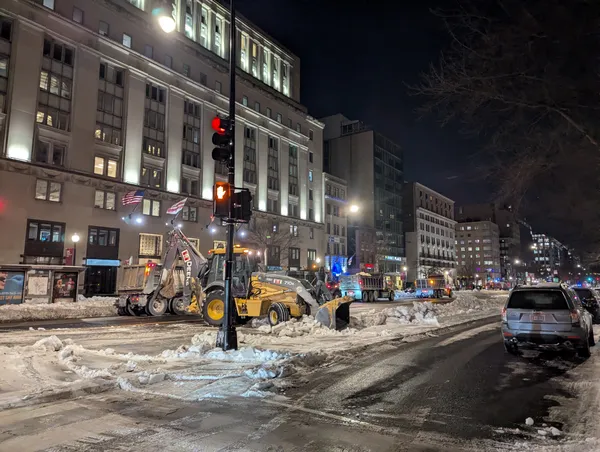
District agencies continued to scale up operations days after the storm, adding contractors and specialized equipment to remove compacted snow and ice from streets and pedestrian corridors. Officials also requested assistance from the National Guard as crews worked to open bus stops, school access routes and remaining trouble spots.
Snow hauling operations moved accumulated piles to designated staging areas as crews worked to reach streets that residents said had been missed or only partially cleared. Trash and recycling collection schedules were also adjusted as access to alleys and curbside pickup points improved.
What residents can do now
- Clear curb ramps and crosswalk entries where possible to restore accessible routes for strollers, wheelchairs and walkers.
- Use de-icer or salt on thin ice after shoveling to reduce refreezing on high-traffic walkways.
- Check on neighbors who may be unable to shovel, especially older residents and people with mobility limitations.
The week’s cleanup has highlighted two parallel realities: city crews face slow, equipment-intensive removal when snow turns to dense ice, while residents and volunteers can rapidly improve safety at individual intersections and blocks by targeting the most critical pedestrian pinch points.
As temperatures and street conditions fluctuate, officials and residents alike emphasized that progress is incremental—measured in passable sidewalks, cleared corners and restored access to daily routines.