New records detail two near-miss incidents involving jets and military helicopters near Reagan National Airport
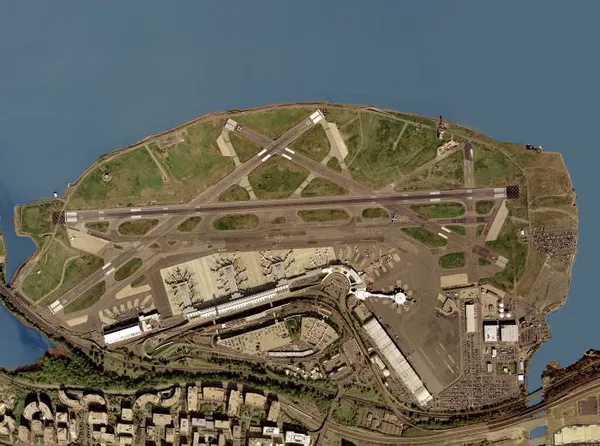
Documents show multiple warning events in the airspace days before the January 2025 fatal collision
Newly disclosed investigative materials describe two close-call events involving commercial passenger flights and U.S. Army Black Hawk helicopters in the Washington region on Jan. 28, 2025—one day before the midair collision near Ronald Reagan Washington National Airport that killed 67 people.
The fatal crash occurred at about 8:48 p.m. Eastern on Jan. 29, 2025, when a PSA Airlines CRJ700 operating as American Airlines Flight 5342 collided with a U.S. Army Sikorsky UH-60L Black Hawk helicopter (callsign PAT25) near the airport and fell into the Potomac River. All 67 people aboard the two aircraft were killed.
What the Jan. 28 close calls involved
The newly described Jan. 28 events underscore how frequently helicopter traffic and commercial airline operations intersect near the airport’s approach and departure corridors.
In one event, a PSA Airlines flight arriving into the Washington area received a traffic alert related to the proximity of two Black Hawk helicopters. The encounter involved aircraft separated by roughly one to two miles laterally and about 600 feet vertically at the time of the warning.
In the second event, records indicate another close-proximity encounter involving military helicopter activity and a commercial operation in the same congested airspace complex.
Such alerts are significant in the operational context around Reagan National, where aircraft can be transitioning between approach segments while helicopters fly published routes along the Potomac River and through designated corridors serving federal and military facilities.
How the fatal Jan. 29 collision unfolded
Investigators determined that the crash resulted from a convergence of route design, operational practices, and human-performance factors. The airliner was on final approach to Runway 33 when it collided with the helicopter. Investigators found that the helicopter route structure placed military rotorcraft traffic in close proximity to a runway approach path, with reliance on visual separation playing a central role in the system’s day-to-day operation.
Investigators concluded that the established separation margins between helicopters operating on Route 4 and aircraft approaching Runway 33 were insufficient, elevating the risk of a midair collision.
In addition to route proximity, investigators cited controller workload and the operational practice of combining positions in the tower, along with limitations in collision-alerting and traffic-awareness systems, as factors that degraded safety margins. Investigators also identified helicopter altitude-exceedance risks tied to barometric-altimeter tolerances and pilot awareness.
Regulatory and operational changes after the crash
Following the collision, federal aviation authorities imposed restrictions on helicopter activity in the immediate area around Reagan National and reduced the airport’s hourly arrival rate. Authorities later updated helicopter routing and zone boundaries around the airport, moved certain routes farther from approach paths, and required aircraft operating around the airport to broadcast position and identification using ADS-B Out, with limited exceptions.
The Jan. 28 close calls, emerging alongside the broader investigative record, provide additional detail on how repeated proximity events preceded the January 2025 disaster and shaped the subsequent push to redesign procedures in one of the nation’s most complex mixes of civilian and government aviation traffic.