National Park Service to remove part of D.C.’s 15th Street protected bike lane on federal land
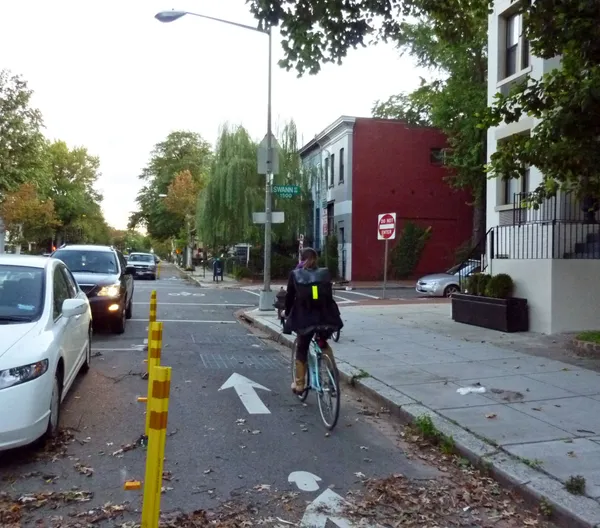
Planned change targets the National Mall segment
A key segment of Washington’s north–south protected bicycle route on 15th Street NW/SW is set to be removed from federal land on the National Mall, interrupting a corridor that carries riders between downtown, the White House area, and the Tidal Basin.
The change is scheduled for Monday, March 23, 2026. The affected portion runs from Constitution Avenue through the Tidal Basin area, where roadway authority rests with the National Park Service. North of Constitution Avenue, the protected lane remains under District control and is not included in the federal action.
Federal rationale centers on event access and operations
Federal officials have framed the removal as an operational and access measure tied to peak seasonal use of the Mall. In public statements, the National Park Service has cited upcoming Cherry Blossom season activity and planning for the nation’s 250th anniversary as reasons to prioritize access for residents, commuters, visitors, and emergency services, with an emphasis on coordinated mobility and security needs.
The 15th Street facility on the Mall was originally built as a joint federal–District effort. In October 2021, the National Park Service announced it was partnering with the District Department of Transportation to implement safety improvements on 15th Street, including a two-way protected cycletrack intended to improve pedestrian safety and create a direct bicycle connection between the White House, the National Mall, and the Jefferson Memorial.
Safety findings and competing assessments
The District has pointed to safety data in favor of the protected design. A District transportation evaluation of the 15th Street protected lane reported reductions in reported crashes after installation, including a 46% reduction in all roadway crashes and a 91% reduction in bicycle injury crashes on the studied segment.
Separately, earlier research and reporting on the broader 15th Street facility has also highlighted safety concerns and conflict points common to two-way protected lanes, particularly at intersections and driveways. Those findings have fueled ongoing debate over whether specific segments require redesign rather than removal.
Public response and implications for connectivity
The removal has prompted renewed organizing among riders and advocacy groups, with a weekend protest ride planned ahead of the scheduled work. Transportation planners and cycling groups say the immediate impact will be a discontinuity in one of the city’s most heavily used protected routes, requiring riders to mix with general traffic or detour through areas with higher tourist volumes and complex turning movements.
More federal-event street changes expected in 2026
The 15th Street decision arrives amid broader transportation planning on or near federal spaces ahead of major 2026 events. An IndyCar street race—the Freedom 250 Grand Prix—is scheduled for August 22–23, 2026, with plans that include Pennsylvania Avenue and the National Mall. Event planning documents and public announcements have indicated the Pennsylvania Avenue bike lane may be dismantled at least temporarily to accommodate the race footprint.
- Date of scheduled 15th Street Mall segment removal: March 23, 2026
- Location: 15th Street from Constitution Avenue through the Tidal Basin on federal land
- District-reported safety findings: 46% fewer roadway crashes; 91% fewer bicycle injury crashes (evaluated segment)
- Next major 2026 disruption risk: Pennsylvania Avenue corridor associated with the Aug. 22–23 street race
What happens next will hinge on whether federal agencies pursue a replacement design, a reroute strategy, or a longer-term reconfiguration tied to event and security planning on the Mall.