Inside the NTSB’s Washington laboratories where investigators extract critical recorder data after major transportation accidents
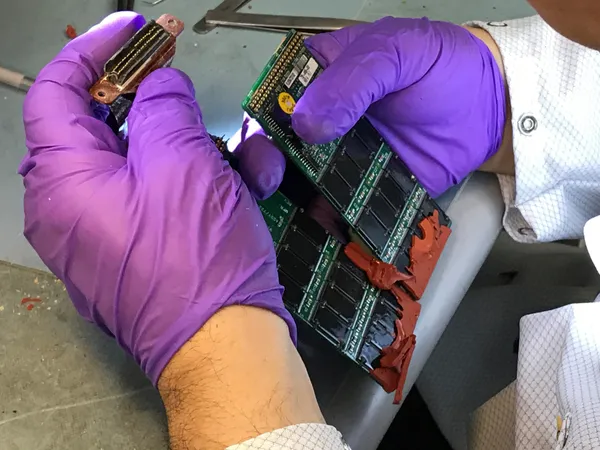
A specialized corner of federal safety work, largely unseen by the public
At the National Transportation Safety Board’s headquarters in Southwest Washington, teams of engineers and specialists work in secure laboratory spaces that can determine what happened in the final moments before a crash. While field investigators are often the visible face of an NTSB response, evidence gathered at accident scenes is ultimately brought to Washington for technical examination designed to support a final determination of probable cause and safety recommendations.
The NTSB’s headquarters is located at 490 L’Enfant Plaza, SW, in Washington, D.C. The agency investigates civil aviation accidents nationwide and selected major accidents across other modes of transportation, using laboratory analysis to convert damaged or contaminated evidence into usable technical findings.
From recovery to the lab: how recorders and devices are processed
One focal point of the Washington lab work is the handling and analysis of recorders and other electronics recovered from accident sites. In aviation, these devices typically include cockpit voice recorders and flight data recorders, which can capture audio and performance parameters that help reconstruct an aircraft’s actions and crew environment. Investigators also routinely encounter other electronic devices that may carry relevant data but were not built to survive severe impact, fire, or water exposure.
Laboratory workflows typically begin with careful documentation of evidence condition on arrival—preserving chain-of-custody and recording damage patterns—before engineers attempt mechanical access to internal components. In cases involving heavy contamination, debris, or deformation, the initial stage may be conducted in a controlled workspace designed specifically for dirty or damaged hardware before the components move to more specialized benches.
Initial intake and documentation: photographs, condition notes, and evidence handling controls.
Mechanical access and stabilization: disassembly to reach memory modules and connector points.
Data extraction and conversion: transforming raw recorder output into formats used for analysis and timeline building.
Microelectronics and chip-level recovery: when devices are too damaged for standard downloads, specialists may work down to the individual-chip level to recover data while minimizing risk of loss.
Reference hardware and the challenge of damaged recorders
A persistent technical hurdle is that recorders can arrive severely damaged and may not interface normally with download equipment. Engineers address this by using reference exemplars of recorder models as a known-good baseline—an approach that can allow memory components from a damaged unit to be read using an intact matching chassis. This kind of reference-driven extraction is designed to maximize the likelihood of retrieving data even when housings, connectors, or internal boards have been compromised.
In major investigations, laboratory work often determines whether critical seconds of audio, flight data, or electronic records can be recovered at all.
Beyond forensics: communications, public proceedings, and family assistance
The Washington footprint also supports the public-facing and human aspects of investigations. The NTSB maintains a boardroom and conference center at 429 L’Enfant Plaza, SW, used for board meetings, hearings, and public forums. Separately, the agency’s Transportation Disaster Assistance Division coordinates family assistance resources and serves as a primary point of contact for survivors, families, and friends seeking investigative updates limited to publicly released information.
Together, these operations underscore how an NTSB investigation extends beyond the crash site: it is a structured process that combines evidence recovery, laboratory engineering, and formal public documentation to support findings intended to prevent future accidents.