How Washington’s Cherry Trees Began: The March 27, 1912 Planting That Shaped a Centennial Tradition
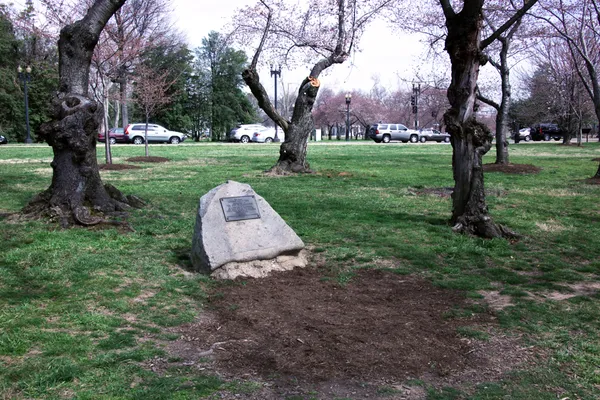
A ceremonial start to a lasting landmark
On March 27, 1912, two Japanese flowering cherry trees were planted beside what is now the Tidal Basin in West Potomac Park, marking the public beginning of a landscape feature that would become one of Washington’s most recognizable seasonal events. The ceremony was carried out by First Lady Helen Herron Taft and the Viscountess Chinda, the wife of Japan’s ambassador to the United States, and it centered on two Yoshino cherry trees.
Though modest in scale, the moment became the symbolic starting point of a larger planting effort that tied civic beautification to international exchange. The 1912 ceremony is widely treated as the milestone that later commemorations—and eventually the annual festival culture around bloom season—trace back to.
From civic proposal to diplomatic gift
The project that culminated in the 1912 planting was years in the making. The idea of lining parts of the capital with Japanese cherry trees had been advanced for decades by Washington advocate and writer Eliza Ruhamah Scidmore, who promoted the concept of planting ornamental cherries in the city’s parklands. The proposal ultimately converged with diplomatic efforts that enabled Japan to provide trees as a formal gesture of friendship.
The 1912 planting is also closely connected to an earlier complication: a prior shipment of cherry trees arrived in poor condition, carrying pests and disease concerns serious enough that the trees were destroyed to protect local plant health. The replacement effort led to the 1912 ceremony and the broader establishment of cherries around the basin and nearby park areas.
What was planted—and where
The two trees planted on March 27, 1912 were Yoshino cherries, a variety prized for its pale blossoms and mass-bloom effect. Over time, additional varieties were added in the broader National Mall and Memorial Parks system, reflecting both horticultural diversity and successive planting campaigns.
Date: March 27, 1912
Participants: First Lady Helen Herron Taft and Viscountess Chinda
Species/variety: Yoshino cherry (Prunus yedoensis)
Location: The northern bank of the Tidal Basin area in West Potomac Park
A living symbol shaped by stewardship and replacement
The cherry trees’ history is not only celebratory; it is also administrative and ecological. Over more than a century, the trees have required replanting, propagation, and periodic restoration as aging specimens decline and as park infrastructure changes. In recent decades, horticulturists have also worked to preserve genetic lineages from surviving early trees through propagation and exchange programs, highlighting that the display Washington residents and visitors see each spring is sustained through ongoing cultivation rather than permanence.
The March 27, 1912 planting is remembered as the ceremonial beginning of the cherry trees’ presence at the Tidal Basin, linking public landscape planning with a diplomatic exchange that continued through later replantings and commemorations.
Today, the 1912 date endures as a historical marker in the city’s calendar—an event rooted in diplomacy, plant health safeguards, and long-term park management, as well as in the cultural meaning later attached to the annual bloom.