How EPA ethics guidance allowed former industry advocates to shape dicamba and formaldehyde regulatory decisions
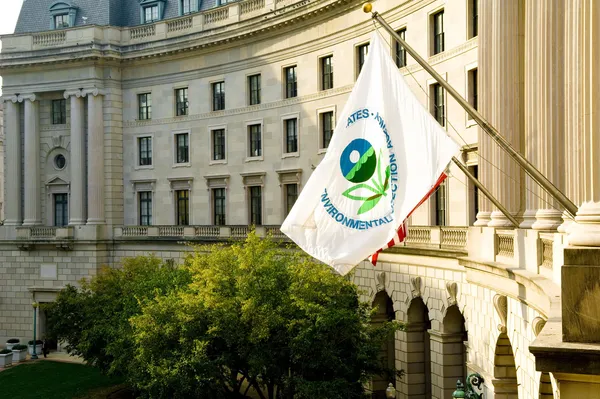
FOIA records detail ethics determinations affecting pesticide and chemical safety actions
Internal emails and ethics memoranda reviewed by washingtondc.news show how federal ethics officials at the Environmental Protection Agency (EPA) interpreted “impartiality” standards to permit several former industry advocates to work on consequential regulatory matters after entering government.
The documents center on decisions involving dicamba, an herbicide used on genetically engineered soybeans and cotton, and formaldehyde, a widely used chemical with significant workplace and consumer exposure pathways. The records reflect a recurring approach: participation was restricted on narrowly defined interactions tied directly to a former employer’s specific submissions or interests, while involvement in broader policy and rulemaking affecting the same subject area was allowed.
Dicamba: limits on former lobbyist focused on specific employer comments, not the overall decision
The records show that Kyle Kunkler, previously a lobbyist for the American Soybean Association, was cleared to work on pesticide matters, including dicamba. Ethics guidance prepared around his late-June start at EPA indicated he should avoid participating in meetings, discussions, or decisions about his former employer’s specific comments on dicamba. However, the same guidance stated he could still work on dicamba-related matters generally, including comments submitted by other parties even when overlapping with positions taken by the association.
EPA announced on July 23, 2025 that it was releasing for public comment a proposed decision to approve registrations for new uses of dicamba, with additional measures described as aimed at addressing ecological risks identified in the agency’s assessment. The agency outlined a process in which it would consider public comments and then decide whether the action meets the statutory standard for registration, alongside additional review steps related to endangered species consultation where applicable.
Dicamba’s regulatory history has included multiple court interventions. A federal court vacated EPA’s approval in 2020 over drift-related concerns, and a later approval was revoked by a court in 2024, again citing drift damage as a continuing problem.
Formaldehyde: shift toward a threshold-based approach amid an ongoing TSCA process
In the formaldehyde matter, ethics approvals addressed participation by two senior officials with chemical-industry backgrounds: Nancy Beck, who leads EPA’s Office of Chemical Safety and Pollution Prevention, and Lynn Dekleva, who serves as deputy. Written ethics authorizations allowed their participation on issues characterized as generally applicable rulemaking or policymaking, while ethics officials described restrictions as applying more narrowly to certain activities involving former employers or clients.
EPA finalized a TSCA risk evaluation for formaldehyde on January 2, 2025, determining that the chemical presents an unreasonable risk of injury to human health for workers and consumers under its conditions of use. On December 3, 2025, EPA released an updated draft risk calculation memorandum for public comment, describing a scientific approach that uses sensory irritation as the most sensitive endpoint for inhalation exposure assessments and stating that managing risks for acute sensory irritation would be protective against other health effects, including cancer.
Key ethics question raised by the records
- When a topic is the same as a prior advocacy focus, restricting involvement only in a former employer’s specific filings can still permit participation in the overarching regulatory outcome.
- Ethics approvals for broadly applicable policymaking can place former industry advocates in decision-making positions on issues directly affecting the sectors they previously represented.
The records reflect a consistent distinction drawn between “particular matters” tied to specific parties and broader actions deemed generally applicable, a framework that can shape how recusals are defined and enforced across high-impact regulatory decisions.