House vote to block D.C. tax decoupling puts local credits and revenue at risk mid-season
Congressional review targets a D.C. tax conformity measure adopted in late 2025
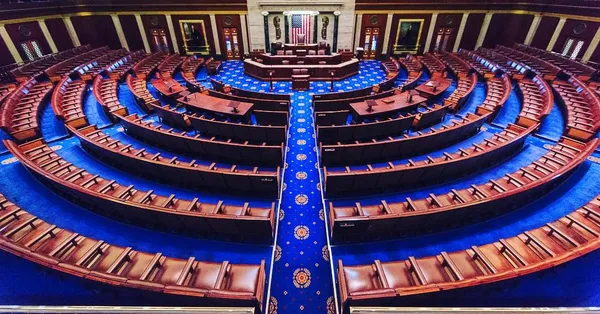
Washington, D.C.’s authority to set its own tax rules is facing a near-term test after the U.S. House approved a resolution on February 4, 2026, to disapprove a District law that revised how the city’s tax code conforms to recent federal changes. The action seeks to nullify the D.C. Income and Franchise Tax Conformity and Revision Temporary Amendment Act of 2025, a measure enacted by the D.C. Council on December 20, 2025 and transmitted to Congress on December 30, 2025.
The Senate version of the disapproval resolution identifies the targeted District measure by name and act number and would, if passed by both chambers and enacted, overturn the local law under Congress’ review authority over District legislation.
What the D.C. law changed and why it matters for the budget
The 2025 District legislation adjusted the city’s conformity to the federal tax code—an approach commonly used by states and local jurisdictions to accept some federal provisions while rejecting others for local revenue and policy reasons. In D.C., the tax changes were paired with new or expanded local tax benefits aimed at working families, including movement toward a larger local Earned Income Tax Credit match and a new child tax credit.
D.C. law provisions establish a child tax credit of $1,000 per qualifying child, with income-based phaseouts, beginning with the taxable year starting January 1, 2026. The District’s legislative package was designed to reallocate revenue that would otherwise be reduced by mirroring certain federal tax changes at the local level.
- Local policy lever: selective conformity (“decoupling”) from federal tax changes.
- House action: disapproval vote on February 4, 2026, to nullify the District’s temporary conformity changes.
- Budget stakes: estimated local revenue loss of roughly $600 million to $658 million through 2029 if the disapproval becomes law.
Administrative disruption risk during the 2026 filing season
District financial officials have warned that reversing the tax rules during filing season would force operational changes that can’t be executed quickly. A midstream shift would require revisions to tax forms, updates to electronic filing systems, coordination with third-party tax software and preparers, and taxpayer communications. Officials have said this could require a suspension of local processing and push deadlines later into 2026, potentially into the fall.
A retroactive change during filing season can create conflicting instructions, delayed processing, and possible refiling for taxpayers who already submitted returns under the rules in effect at the time.
Broader autonomy questions for the District
The episode is unfolding against the backdrop of D.C.’s limited self-governance under federal law, which allows Congress to review and overturn locally passed legislation. District leaders argue that tax conformity decisions are routine governmental functions elsewhere and that congressional reversal would constrain the city’s fiscal autonomy—particularly when the changes are tied directly to balancing the budget and financing local credits.
Next steps depend on Senate action and, if advanced, final enactment. Until then, the District’s tax administration and fiscal planning remain exposed to federal decisions that could alter local law on short notice.