House Oversight Committee Advances Bill Targeting Washington’s Automated Speed Cameras, Raising Home-Rule and Safety Questions
What the committee action would change
The U.S. House committee with primary jurisdiction over District affairs has moved forward legislation that would revoke Washington, D.C.’s authority to use automated traffic enforcement systems, a step that intensifies an ongoing federal-local clash over traffic safety policy and the District’s self-governance.
The proposal, introduced in the current Congress as H.R. 5525, would repeal the section of D.C. law that authorizes automated traffic enforcement. The bill also includes a separate repeal related to the District’s ability to erect signage restricting certain right turns on red. If ultimately enacted, the measure would remove the legal foundation for the District’s use of speed, red-light, stop-sign and other automated enforcement cameras.
How large D.C.’s camera network has become
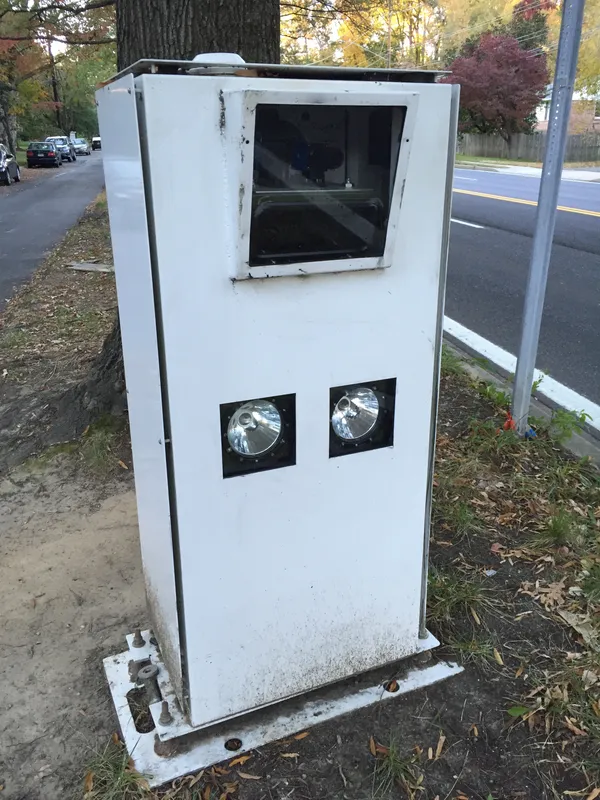
Automated enforcement has become a central element of D.C.’s traffic-safety strategy and a significant component of the city’s non-tax revenue. Recent counts place the District’s network at 546 cameras in operation, including stationary speed cameras as well as red-light, stop-sign, and bus-mounted cameras used for specific violations such as bus-lane blocking.
The system’s footprint has expanded as the District has pursued Vision Zero goals and sought tools that can operate continuously without requiring additional patrol staffing.
Safety outcomes and the competing interpretations
The committee action arrives amid sharply different interpretations of what the camera program accomplishes. District officials and some local lawmakers argue that automated enforcement is an effective deterrent that supports safer driving behavior and contributes to reductions in severe crashes. They have pointed to year-over-year changes in traffic fatality totals and to enforcement data showing repeated dangerous driving by a subset of drivers.
Opponents, including some members of Congress and commuters, contend that the program functions as an overreaching enforcement mechanism that burdens drivers financially, encourages abrupt braking near camera locations, and relies too heavily on fines. Critics also argue that camera enforcement can create perverse incentives when revenue becomes intertwined with budgeting.
Budget, equity, and enforcement beyond city limits
The financial stakes are substantial. Local budget officials have previously projected that a broad ban on automated enforcement could create major gaps in the District’s financial plan, forcing cuts or replacement revenue. At the same time, equity concerns have remained part of the local debate, as escalating fines can fall disproportionately on lower-income residents and households already under financial stress.
Separately, the District has taken steps to improve collections from drivers who accumulate unpaid tickets while living outside the city, an approach that has added another layer of controversy about accountability and the reach of local enforcement.
What happens next
Advancing out of committee does not make the bill law. The measure would still require passage by the full House and Senate and the president’s signature. Even so, the committee vote signals renewed momentum behind federal efforts to reshape how Washington polices traffic violations—an issue that blends public-safety policy, fiscal consequences, and the long-running dispute over how much autonomy the District should have to govern itself.
- Bill at issue: H.R. 5525 (119th Congress)
- Core provision: repeal of D.C.’s authority to use automated traffic enforcement systems
- Secondary provision: repeal related to signage restricting certain right turns on red
Automated enforcement has become one of the District’s most visible—and contested—tools for traffic safety, with implications that extend well beyond transportation policy.