House action could end Washington, D.C.’s automated traffic cameras, raising safety, budget, and oversight questions
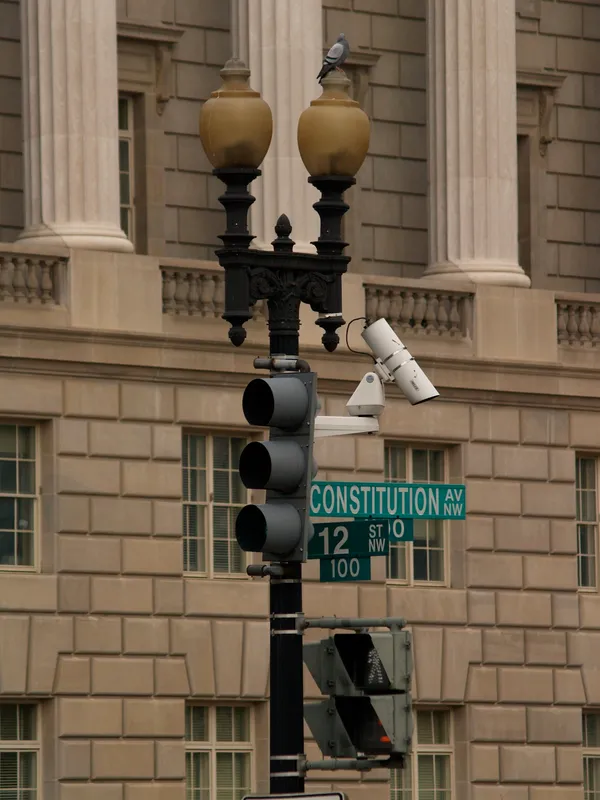
A federal move targets a core element of D.C. traffic enforcement
The U.S. House is moving toward legislation that would strip Washington, D.C. of authority to operate automated traffic enforcement cameras, a system the city relies on for speed, red-light, and stop-sign enforcement. The debate has widened beyond traffic policy, touching on the District’s limited self-governance, public safety strategy, and reliance on fine revenue.
What would change
One vehicle for the effort is the Stop DC CAMERA Act (H.R. 5525), introduced in the 119th Congress and referred to the House Oversight and Government Reform Committee in September 2025. The bill proposes repealing D.C.’s authority to use automated traffic enforcement systems and also addresses restrictions related to signage that prohibits right turns on red.
Separately, federal transportation officials have weighed policy language that would prohibit the operation of automated traffic camera enforcement in the District as part of a broader surface transportation package under development. While the mechanism differs from standalone legislation, the practical effect would be similar: ending D.C.’s ability to use cameras for automated enforcement citywide.
Scale of D.C.’s camera program and revenue implications
Automated enforcement now accounts for the overwhelming majority of traffic citations issued in the District. In 2022, more than 95% of the city’s roughly 1.4 million tickets were issued through automated traffic enforcement, generating nearly $113 million in fines. The scale of the program has made it a focal point for lawmakers who argue that automated enforcement can function as a revenue engine, while D.C. officials describe it as a key tool in traffic-safety efforts.
Safety arguments and competing claims
Supporters of automated enforcement cite research indicating safety benefits from speed camera programs in Washington, including analyses finding reductions in speeding behavior and measurable safety improvements near camera locations. D.C. leaders have also linked automated enforcement to broader road-safety initiatives under the city’s Vision Zero framework.
Opponents, including some House lawmakers, frame the cameras as punitive and question whether placement and fine structures are designed primarily for deterrence or for revenue generation. The controversy has intensified as attention has focused on high-producing camera locations and on public frustration over citations.
Broader national context: federal funding and automated enforcement
The D.C.-specific push is unfolding alongside wider congressional scrutiny of automated enforcement. In the FY 2026 transportation appropriations debate, proposed language has sought to limit or bar federal support for certain automated enforcement uses on federally assisted roadways. Safety organizations and road-building groups have urged Congress to avoid broad restrictions, especially in school zones and highway work zones where automated enforcement is used as a countermeasure.
What happens next
If the House advances D.C.-targeted restrictions, the measure would still require Senate consideration and presidential action before it could take effect.
D.C. officials would face operational and fiscal decisions if cameras were curtailed, including how to replace enforcement capacity and how to address lost fine revenue.
Regardless of the vehicle, the debate is likely to continue as Congress approaches major transportation legislation and as the District argues for local control over street-safety policy.
The fight over automated cameras has become a test of how far Congress will go in directing day-to-day governance in the District—while also serving as a proxy battle over the role of automated enforcement in modern traffic safety.