Ground stop hits Reagan National, Dulles and BWI after chemical odor disrupts Potomac TRACON operations
What happened
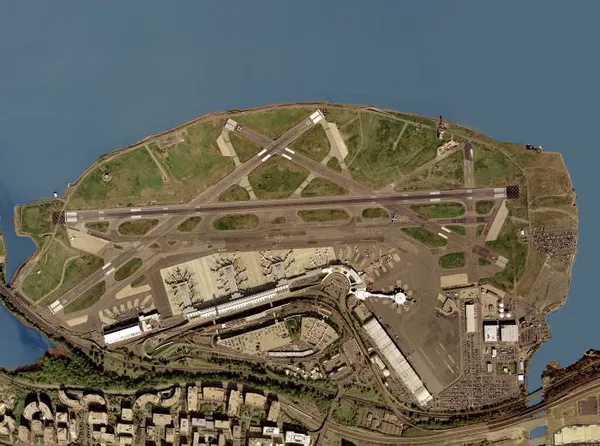
A ground stop was imposed Friday on flights destined for the Washington region’s three major commercial airports—Ronald Reagan Washington National (DCA), Washington Dulles International (IAD) and Baltimore/Washington International Thurgood Marshall (BWI)—after air traffic operations were disrupted by reports of a strong chemical odor affecting personnel at the Potomac Terminal Radar Approach Control facility, commonly known as Potomac TRACON.
The ground stop temporarily prevented aircraft from departing other airports for DCA, IAD and BWI. While a ground stop is aimed primarily at managing inbound traffic, the cascading effects typically include extensive departure delays, gate holds, diversions and cancellations across airline networks serving the National Capital Region.
Why Potomac TRACON matters
Potomac TRACON is a key Federal Aviation Administration air traffic control facility responsible for sequencing and separating arrivals and departures for multiple airports in the Washington area, including the three major commercial airports. Unlike control towers, which primarily manage runways and immediate airport movement areas, TRACON facilities manage aircraft in the terminal airspace surrounding airports, handling flows as planes climb after takeoff and descend on approach.
Because the region’s airports share dense and tightly managed airspace—shaped by nearby military operations and restricted zones—disruptions at Potomac TRACON can affect multiple airports simultaneously even when conditions on the airfields themselves remain normal.
Operational impact for travelers
Airlines and airport operators advised passengers to check flight status directly with carriers before traveling to terminals, as delays can persist after restrictions are lifted while aircraft and crews are repositioned.
- Inbound flights may be held on the ground at their origin airports until the restriction is lifted or amended.
- Aircraft already airborne may be slowed, re-sequenced, or diverted to alternate airports if arrival acceptance rates drop sharply.
- Departures from the region can also be affected as arriving aircraft fail to reach gates on schedule, disrupting aircraft rotations and crew duty-time limits.
What is known—and what is not
Officials described the disruption as linked to an odor incident at an air traffic control facility, a scenario that can trigger building safety responses and staffing constraints that reduce the number of controllers available to work traffic. At the time the ground stop was announced, the specific source of the odor had not been publicly detailed, and no broader public safety advisory was issued for surrounding communities.
Ground stops are used as a safety and traffic-management measure when an airport or the air traffic system supporting it cannot safely accept arriving flights at normal rates.
Regional context
Washington-area air travel is especially sensitive to centralized air traffic control disruptions because DCA, IAD and BWI serve overlapping markets while sharing complex airspace. Even brief interruptions at a core facility can ripple quickly into the Northeast corridor and beyond, where many flights connect through the region on tightly scheduled aircraft turns.
Passengers with near-term travel plans were urged to anticipate rolling delays through the evening as airlines worked to restore normal schedules and accommodate displaced travelers.