First Anniversary of Reagan National Midair Collision Marked by Vigil for 67 Victims in Washington
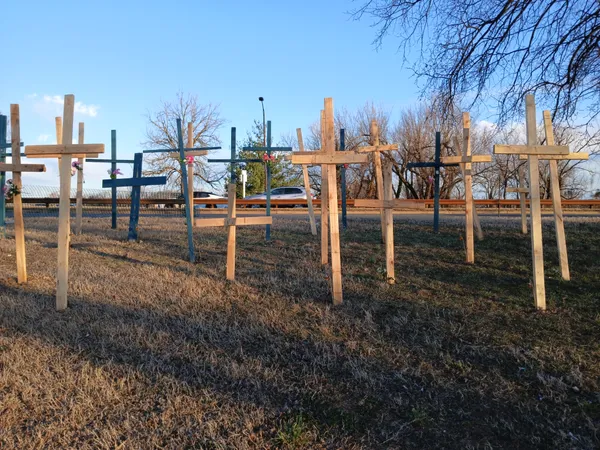
Families gather at Constitution Hall as safety reforms and federal investigations remain in focus
Families and friends of the 67 people killed in the January 29, 2025, midair collision near Ronald Reagan Washington National Airport gathered in Washington on January 28, 2026, for a public vigil honoring those lost. The ceremony took place at Constitution Hall and drew relatives from across the United States, alongside elected officials and transportation leaders.
The crash involved an American Eagle regional jet operating as American Airlines Flight 5342 and a U.S. Army UH-60 Black Hawk helicopter. All occupants of both aircraft died after the collision and impact into the Potomac River. The event has been described by federal investigators as the deadliest U.S. aviation disaster since 2001.
Speakers at the vigil emphasized remembrance of the victims and continued advocacy for changes intended to reduce the risk of similar collisions in the heavily constrained airspace surrounding the nation’s capital.
Investigation findings and a renewed debate over airspace risk management
The anniversary observance followed a National Transportation Safety Board hearing held January 27, 2026, during which investigators presented findings characterizing the collision as preventable and tied to broader, long-running safety challenges. Investigators described a system in which warnings and close-call indicators accumulated over years, while operational complexity around the airport remained high due to dense commercial traffic and frequent government and military aviation activity.
At the vigil, tributes included musical performances and a visual memorial highlighting victims’ lives, including a group of young figure skaters who were among those killed. Families also recognized first responders who entered frigid river conditions during initial rescue attempts and subsequent recovery operations.
Policy actions taken since the crash
In the months after the collision, federal aviation authorities implemented multiple operational changes around Reagan National intended to reduce helicopter and fixed-wing mixing in critical areas. These included permanent closure of a portion of a helicopter corridor identified as a risk point, and tightened restrictions limiting certain helicopter operations near the airport to priority missions such as medical and law enforcement flights under specific conditions.
- Permanent restrictions on non-essential helicopter operations in defined areas near the airport
- Closure of a key segment of the helicopter route involved in the crash
- Updated helicopter route charts and zone boundaries as part of ongoing airspace management revisions
- Procedural updates affecting runway use when helicopters conduct urgent operations near the airport
Legislative push targets aircraft tracking and collision-avoidance capability
Lawmakers have also pursued aviation safety legislation in response to the crash, including measures designed to expand requirements for real-time situational awareness technology. One proposal would direct rulemaking to require ADS-B In capability for certain aircraft operating in airspace where ADS-B Out is already mandated, with phased compliance timelines following enactment.
For families marking the anniversary, the central themes of the night remained remembrance and accountability, with attention now turning to how quickly federal agencies and Congress translate investigative recommendations into lasting operational and regulatory changes.