FAA requires radar-based separation between helicopters and airplanes after 2025 Reagan National midair collision
New national directive targets helicopter-airplane conflicts near busy airports
The Federal Aviation Administration has ordered expanded use of radar-based separation between helicopters and fixed-wing aircraft near airports, a shift intended to reduce reliance on pilot “see and avoid” practices following a fatal midair collision in the Washington region.
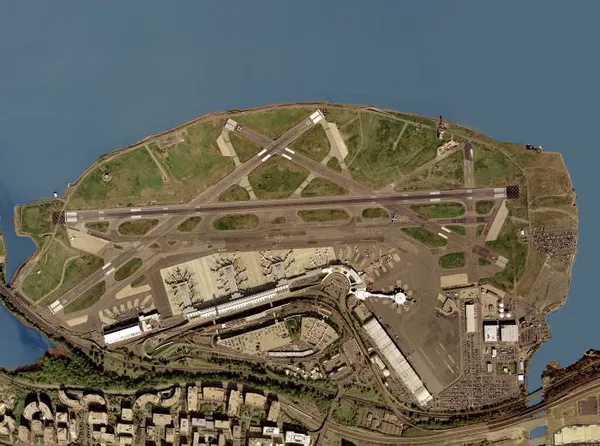
The action follows the Jan. 29, 2025 crash over the Potomac River involving a Bombardier CRJ700 regional jet operating as American Airlines Flight 5342 and a U.S. Army UH-60 Black Hawk helicopter. All 67 people aboard the two aircraft were killed. The collision occurred as the jet was on approach to Runway 33 at Ronald Reagan Washington National Airport.
Why the FAA is changing separation practices
Federal safety investigators concluded that the airspace structure near Reagan National allowed helicopters to operate directly beneath active approach and departure corridors without sufficient procedural protections to manage collision risk. The investigation also found deficiencies in guidance on helicopter route altitudes and boundaries, along with charting gaps that limited shared situational awareness between helicopter and airline operators.
The investigation described repeated close encounters in the area that were not met with timely corrective action and found that air traffic control workload and communications practices increased risk. It also concluded that available onboard collision-avoidance technology had limitations in the low-altitude environment where the crash occurred.
Local restrictions near Reagan National remain central to the response
In the months after the crash, the FAA imposed and refined limits on helicopter operations in the Potomac River corridor near Reagan National while broader reviews proceeded. The agency also updated helicopter route design around the airport, including changes that moved certain route boundaries farther from the airfield and established a transition intended to increase vertical separation from aircraft on final approach. An updated chart reflecting these route changes took effect June 12, 2025.
The FAA also required aircraft operating around Reagan National to broadcast identification and position information using ADS-B Out, with limited exceptions, and trained local air traffic controllers on revised procedures.
What the new approach is designed to accomplish
The FAA’s expanded requirement for radar-based separation is intended to reduce situations where controllers and flight crews depend on visual acquisition—particularly at night, in congested airspace, or when aircraft are on different radio frequencies. The rule also reflects concerns raised after other recent close calls involving helicopters and airplanes near airports in multiple states.
- Objective: procedural separation using surveillance data rather than visual separation.
- Focus area: mixed helicopter and fixed-wing operations near airports with high traffic density.
- Expected effect: fewer conflict points where aircraft paths converge at low altitude.
The FAA’s move aligns with safety investigators’ broader call for reforms to helicopter route design, air traffic control procedures, safety management systems, and collision-avoidance technology following the Reagan National crash.
Implementation details will vary by airport configuration and traffic mix, but the central change is a system-level pivot away from routine “see and avoid” practices where radar-based separation can be applied.