Driver Seen Traveling on Washington’s Metropolitan Branch Trail Raises Questions About Barriers and Enforcement Priorities
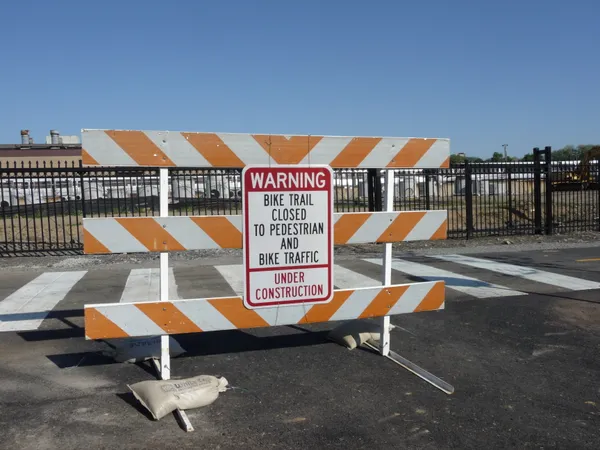
What the video shows and why it matters
A video circulating online shows a passenger vehicle moving along a busy stretch of Washington’s Metropolitan Branch Trail (MBT), a multi-use corridor designed for people walking, biking, and using other non-car forms of travel. The footage captures trail users making space as the vehicle proceeds down the paved pathway.
The MBT functions as a key north–south connection linking Union Station with neighborhoods in Northeast Washington and onward toward Silver Spring via connected segments. Its popularity has grown alongside broader increases in trail and micromobility use, concentrating high volumes of users in certain locations and peak commuting periods.
A transportation corridor with heavy daily use
District transportation data collected during a recent safety pilot found that sensors recorded about 5,000 trips per day during peak hours at high-congestion points on the MBT. The same monitoring found that one out of five users traveled faster than 15 miles per hour during those periods—an indicator of the speed mix that can already heighten collision risk even without the presence of a motor vehicle.
Against that backdrop, the appearance of a car on the trail underscores a different safety challenge: preventing unauthorized motor-vehicle access to spaces intended to be car-free.
How cars can end up on trails
When a motor vehicle enters a protected trail, the incident often raises operational questions that go beyond driver behavior, including:
Whether physical barriers (such as bollards, gates, or pinch points) were present and functioning at entry locations.
Whether nearby curb cuts, service drives, or construction access points could have provided an unintended route onto the trail.
How quickly enforcement or emergency response can reach a trail segment, particularly where wayfinding and location markers are limited.
Broader safety efforts underway on the MBT
In December 2025, the District Department of Transportation launched a pilot project aimed at improving safety on the MBT by encouraging slower speeds among faster trail users. The pilot installed speed feedback signs at two high-congestion locations—Alethia Tanner Park and the Rhode Island Avenue Metro entrance—with the goal of reducing speed-related conflicts and improving comfort for people using the trail during busy hours. Results from the pilot are expected in early 2026.
Recent District safety work on the MBT has focused on managing speed and congestion; unauthorized motor vehicles represent a separate risk that depends heavily on access control and rapid response.
What remains unknown
Key details about the vehicle-on-trail incident have not been publicly verified, including the precise location, the route used to access the trail, whether any collision or injury occurred, and whether enforcement actions were taken. Without confirmed details, the event can be assessed only in general terms: a motor vehicle on a crowded, car-free trail introduces immediate safety hazards and highlights the importance of effective access controls and clear procedures for reporting and response.