Cracked rail near Stadium-Armory junction forces single-tracking, disrupting Orange, Blue and Silver line commutes
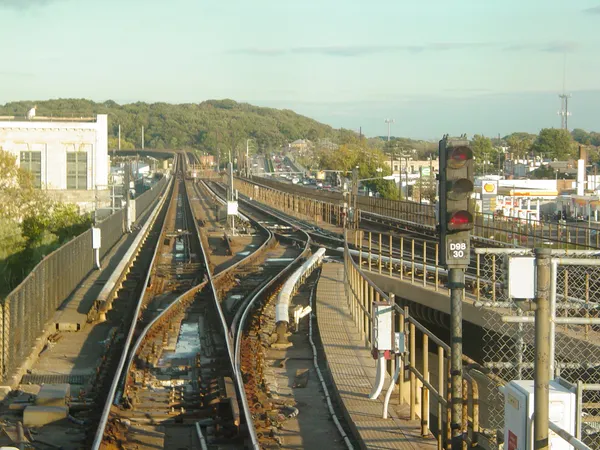
Single-tracking ordered at a key interlocking east of downtown
Morning rail service on Metro’s Orange, Blue and Silver lines was disrupted after a cracked rail was identified near the Stadium-Armory station complex, prompting train controllers to restrict movements through one of the system’s most operationally sensitive junctions. The crack was found at the D&G Junction, a convergence point just outside Stadium-Armory where multiple lines share track infrastructure before splitting toward Maryland and Virginia.
To maintain service while protecting passengers and crews, Metro implemented single-tracking between Eastern Market and Stadium-Armory. Under single-tracking, trains in both directions share one track through the affected segment, a standard safety response that typically reduces capacity and creates cascading delays as trains queue to take turns through the work zone.
How the incident affected riders
The service pattern change affected three lines at once because the junction links downtown to major branches of the network. During the disruption, some Silver Line trains were turned back short of their normal route, a measure used to manage congestion and keep trains circulating on the highest-demand portions of the line while track access is constrained.
Riders reported longer waits and crowding at core transfer points. Single-tracking in this corridor can amplify delays quickly because it sits between the central business district and several high-ridership stations, and because the Orange, Blue and Silver lines are interlined over long stretches of track.
- Impacted segment: Eastern Market to Stadium-Armory
- Primary effect: reduced throughput as trains share a single track
- Network-wide consequence: delays can spread across all three affected lines
What a cracked rail means operationally
A cracked rail is treated as a critical track defect because it can worsen with repeated train loads and temperature-driven expansion and contraction. Standard practice is to slow trains, take a track out of service, or both, until crews can inspect the defect, determine its extent, and complete repairs. Repairs may involve replacing a rail section, installing temporary clamps, and performing follow-up inspections before normal operations resume.
Track defects at interlockings—where switches and crossings concentrate forces—are especially disruptive because there are fewer routing options to bypass the problem.
Why the Stadium-Armory junction is a recurring chokepoint
The Stadium-Armory area has long been a focal point for maintenance and reliability work because it includes interlockings, elevated structures and heavily used track. In recent years, Metro has also scheduled targeted repair programs in the broader corridor outside Stadium-Armory to address aging infrastructure on aerial segments and at the line convergence.
Metro did not immediately provide an estimate for how long the single-tracking would remain in place, but such incidents typically remain active until on-scene crews confirm the repair and verify the track is safe for regular operations.