Colorado River basin governors meet in Washington as states weigh cuts, deadlines and litigation risk
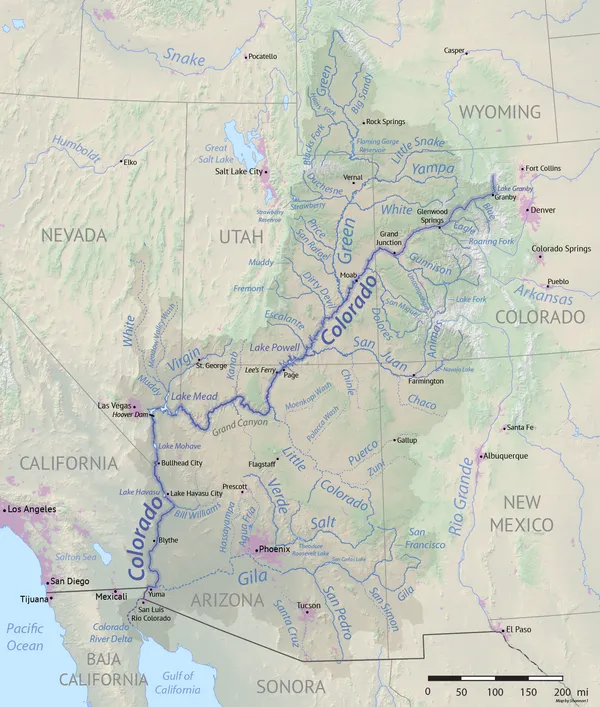
A rare governors-level meeting on Colorado River rules
Governors and senior water officials from the seven Colorado River Basin states met in Washington on January 30, 2026, in a session that lasted more than two hours and brought the basin’s long-running negotiations into sharper political focus. The talks were convened by Interior Secretary Doug Burgum as states attempt to shape new operating guidelines for the river system ahead of a federal timeline that could determine whether management decisions are made by negotiated agreement or by federal action.
California Gov. Gavin Newsom did not attend due to a previously scheduled family commitment; the state was represented by its natural resources secretary. Statements released after the meeting described progress as limited but noted increased willingness to continue bargaining, including discussion of converting conservation programs into enforceable, measurable water savings.
Why the negotiations are urgent
The Colorado River is a foundational water supply for more than 40 million people, supports hydropower production, and irrigates millions of acres of farmland across the West. The system has been under sustained stress after roughly a quarter-century of declining runoff and reservoir levels, with Lake Mead and Lake Powell remaining central indicators of shortage risk.
The current framework guiding operations at those reservoirs is set to expire in 2026. The Bureau of Reclamation has continued advancing a post-2026 federal environmental review, releasing a draft environmental impact statement in early January 2026 and opening a public comment period running from mid-January through early March. Federal officials have said a decision on post-2026 operations is expected before October 1, 2026, the start of the 2027 water year.
The core dispute: how to share shortages between Upper and Lower Basin states
The basin is split into two negotiating blocs with different legal and hydrologic constraints:
- Upper Basin: Colorado, New Mexico, Utah and Wyoming
- Lower Basin: Arizona, California and Nevada
At issue is how to distribute additional reductions when supplies are low. Lower Basin states have argued for broader, mandatory cuts across all seven states during dry years, while Upper Basin states have emphasized that they historically use less water and face legal delivery obligations tied to downstream flows.
Arizona is viewed as particularly exposed in a shortage scenario because major deliveries through the Central Arizona Project have comparatively junior priority in the river’s legal framework.
Potential outcomes: a near-term framework or courtroom fights
State negotiators have repeatedly signaled a preference for a multi-state agreement rather than a court-driven outcome. Still, legal conflict remains a realistic fallback if consensus fails—an outcome officials in multiple states have described as costly, uncertain and disruptive for water-reliant sectors.
After the Washington session, several governors publicly emphasized continued work toward a compromise framework while acknowledging that significant differences remain.
One near-term possibility discussed by participants in recent weeks has been a shorter-duration agreement that reduces immediate uncertainty while longer-term operating rules continue to be refined through the federal process.
With deadlines approaching and hydrologic conditions expected to remain volatile, the Washington meeting underscored both the scale of the stakes and the narrowing window for the states to align on durable reductions and enforceable conservation.