Clones of Washington’s famed “Stumpy” cherry tree bloom for the first time after Tidal Basin removal
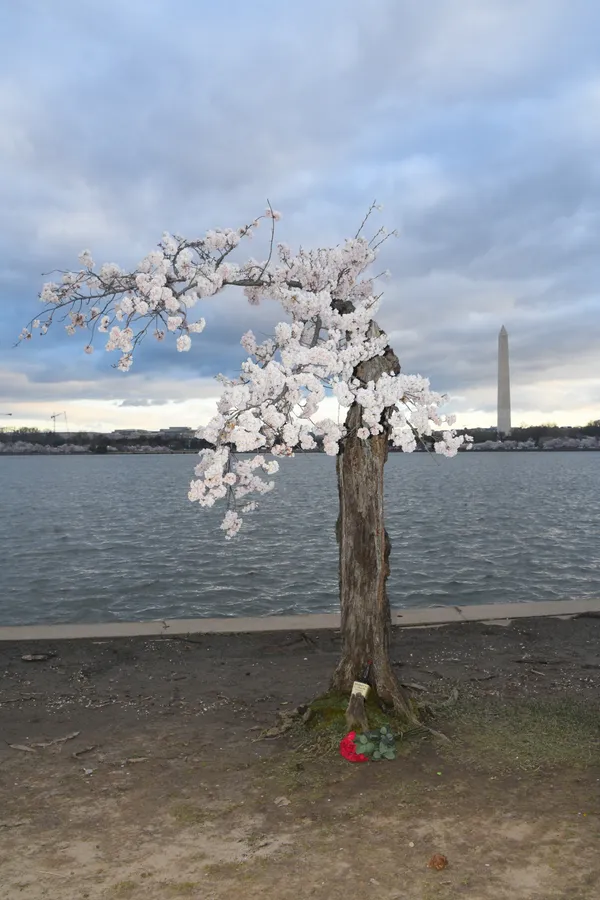
A familiar symbol returns—this time in replicated form
Several cloned offspring of “Stumpy,” the unusually gnarled cherry tree that drew large crowds near the Tidal Basin in recent blossom seasons, have produced their first blossoms, marking a new chapter in a closely watched preservation effort tied to major National Mall shoreline construction.
Stumpy became widely known for flowering each spring despite its stunted shape and deteriorating condition. The tree stood in a low-lying area where frequent flooding and saturated soils stressed roots—conditions that intensified as portions of the Tidal Basin’s aging seawall continued to sink and fail.
Why Stumpy was removed
In 2024, Stumpy was taken down as part of a multi-year National Park Service project to rehabilitate the Tidal Basin seawall and surrounding landscape. The work required the removal of a significant number of trees, including many cherry trees, to allow excavation, shoreline stabilization, and rebuilding designed to address chronic flooding and long-term structural risks along the basin.
The removal drew attention because Stumpy had become a seasonal gathering point for visitors and local residents. While the original tree could not be kept in place during construction, plans were set in motion to preserve its genetic line through propagation.
How the clones were made and what “first bloom” signifies
Cloning a tree in this context refers to growing new trees from cuttings so the resulting plants are genetically identical to the original. Horticulturists collected clippings from Stumpy and worked to root and establish young plants under controlled conditions before transitioning them to continued care and monitoring.
The first flowering of these clones is a milestone because it signals that at least some plants have progressed beyond early survival and growth stages into reproductive maturity—an indicator that propagation was successful and that the clones are developing normally as flowering ornamentals.
What comes next for the “Stumplings”
Officials have indicated that the intent is for Stumpy’s clones to be planted once conditions at the Tidal Basin can support long-term survival, aligning with broader replanting plans linked to shoreline restoration. The timing of any planting depends on construction sequencing, site readiness, and horticultural considerations such as soil stability, drainage, and root-zone conditions.
- Stumpy’s removal was tied to seawall reconstruction and landscape rehabilitation at the Tidal Basin.
- Cloned trees were grown from cuttings to preserve Stumpy’s genetic identity.
- The clones’ first blossoms mark a key step toward eventual reintroduction into public landscapes.
The return of Stumpy’s blooms—through clones rather than the original trunk—illustrates how high-profile urban trees can be preserved genetically even when infrastructure needs force their removal.
The development arrives during another closely monitored cherry blossom season in the capital, where peak bloom timing, weather conditions, and ongoing shoreline work continue to shape how visitors experience one of Washington’s most recognizable spring events.