Cherry Blossoms in Washington: What Peak Bloom Means, Where to Go, and How to Plan Visits
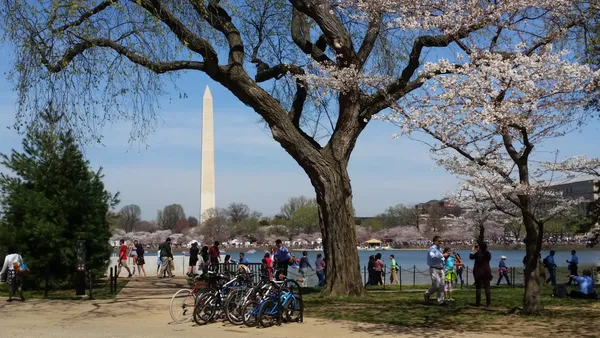
Peak bloom arrives as the region enters its busiest spring stretch
Washington’s cherry blossom season has entered its most time-sensitive phase, with peak bloom tied to the city’s signature Yoshino cherries around the Tidal Basin and National Mall. Peak bloom is defined as the point when 70% of Yoshino blossoms are open. In 2026, the National Park Service had projected peak bloom to fall between March 29 and April 1, noting that exact timing depends on weather conditions.
Once peak bloom begins, blossoms typically remain on the trees for roughly a week to 10 days, though wind, rain, and sudden temperature swings can shorten that window. In practical terms, visitors planning around “peak bloom weekend” should be prepared for crowd surges and for conditions that can change quickly from one day to the next.
Festival calendar overlaps with bloom timing
The National Cherry Blossom Festival runs March 20 through April 12, 2026, bringing performances and cultural programming that extends beyond the short peak-bloom window. The schedule means some visitors will arrive for festival events even if the trees have not yet fully opened, while others will come after peak bloom for late-season blossoms, neighborhood trees, or non-floral events.
What first-time visitors should know about the Tidal Basin route
Visitors should expect altered pedestrian patterns around restoration work near the Tidal Basin. The National Park Service has said walkways through the restoration zone between the Jefferson Memorial and the Franklin Delano Roosevelt Memorial will remain closed throughout the bloom period, with clearly marked alternate routes available and the full loop around the Tidal Basin remaining accessible.
- Arrive with a flexible walking plan; detours may change the most direct shoreline path.
- Allow additional time for bottlenecks near the Jefferson Memorial, especially during midday.
- Plan for limited space for photos at the water’s edge; patience and spacing are often necessary.
Where to find blossoms beyond the Tidal Basin
While the Tidal Basin remains the most recognizable setting, the city’s cherry trees are distributed across multiple sites, and bloom timing can vary by location and variety. The U.S. National Arboretum, for example, has a wide range of cherry varieties that can extend the viewing season beyond the Yoshino peak.
Peak bloom is a specific botanical threshold for Yoshino cherries, not a guarantee that every blossom across the region will be at the same stage.
Planning guidance for a short, high-demand season
For visitors prioritizing photos and blossom density, the best results typically come from planning for early-morning or weekday visits and treating the forecast as a moving target. For visitors prioritizing culture and programming, festival events continue well beyond the narrow peak-bloom window, offering alternatives when weather or crowds make the Tidal Basin less practical.
With peak bloom defined by a measurable threshold and the festival spanning several weeks, the most reliable approach is to separate “bloom-chasing” from “festival-going” and plan each on its own timeline.