Boston marks first anniversary of Potomac midair crash that killed 67, including figure skaters
A year after the collision, remembrance and safety scrutiny converge
Boston has marked the one-year anniversary of the Jan. 29, 2025 midair collision over the Potomac River near Ronald Reagan Washington National Airport that killed 67 people, including members of the U.S. figure skating community with ties to the Skating Club of Boston. The anniversary arrived as federal investigators closed a yearlong inquiry into the accident and issued a set of aviation safety recommendations intended to prevent similar collisions in the congested airspace around the nation’s capital.
The crash occurred at 8:48 p.m. Eastern on Jan. 29, 2025, when American Airlines Flight 5342—a CRJ700 regional jet operated by PSA Airlines—collided in flight with a U.S. Army Sikorsky UH-60L Black Hawk helicopter. The impact occurred about a half mile southeast of the airport; both aircraft fell into the Potomac River. All 64 people aboard the airliner and all three crew members on the helicopter died.
Skating community losses reached Boston-area families and coaches
Among those killed were 28 figure skaters, coaches, and family members traveling back from a national development camp held in connection with the 2025 U.S. Figure Skating Championships in Wichita, Kansas. In the Boston area, the Skating Club of Boston lost six people: youth skaters Jinna Han and Spencer Lane, their mothers Jin Han and Christine Lane, and coaches Evgenia Shishkova and Vadim Naumov.
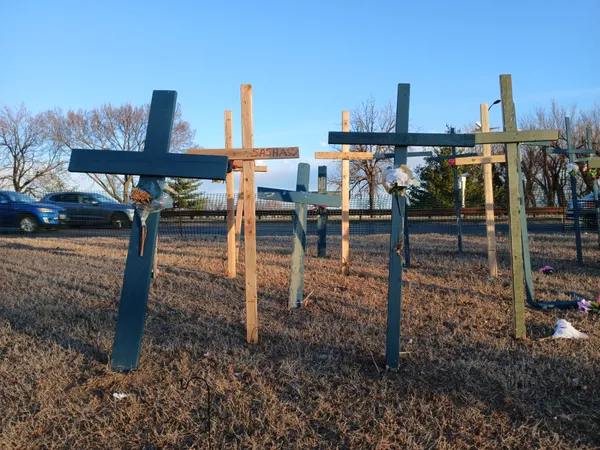
In Boston, tributes over the past year have centered on both public remembrance and long-term commitments tied to the victims’ names. The Skating Club of Boston has set out a permanent memorial plan at its Norwood facility that includes dedicated benches with bronze plaques, commemorative skate displays, and the renaming of its West Rink as the “Always Champions Training Rink.” The plan also includes annual scholarships in honor of Han and Lane and additional awards intended to recognize skaters and coaches in the years ahead.
Investigation findings focus on airspace design and oversight
This week, the National Transportation Safety Board concluded its investigation and stated that systemic failures in airspace design, safety oversight, and risk management by the Federal Aviation Administration and the U.S. Army contributed to the collision. The board approved dozens of findings and issued 50 recommendations spanning helicopter route design, air traffic control procedures, safety management systems, data sharing, and collision-avoidance technology.
What happens next
- Implementation timelines for aviation safety recommendations will depend on actions by federal agencies and the military services involved.
- Boston-area skating institutions are moving forward with permanent memorials and recurring scholarships tied to the victims’ names.
- Commemorations are expected to continue in both Boston and the Washington region as the skating season progresses and as policy changes are debated.
One year on, Boston’s memorial actions and the federal safety findings underscore two parallel tracks: community grief and an ongoing push to reduce collision risk in one of the country’s most complex flight corridors.