Baltimore Columbus statue replica, toppled in 2020 protests, is slated for installation near the White House
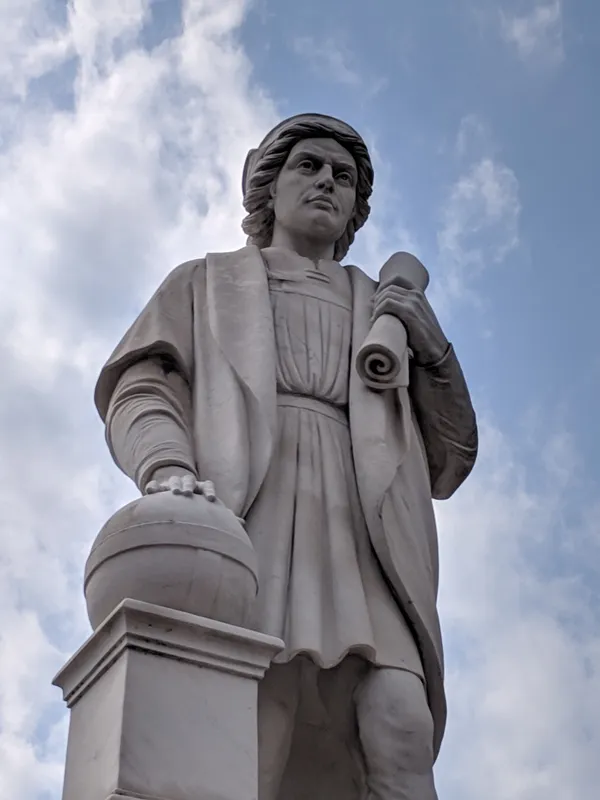
A Baltimore monument’s reconstruction moves into federal hands
A reconstructed statue of Christopher Columbus linked to a 2020 protest action in Baltimore is now under a loan agreement that could place it on or near the White House complex, reopening a long-running national debate over public monuments, historical memory, and civic space.
The original Baltimore statue stood near the city’s Inner Harbor at the edge of the Little Italy and Harbor East neighborhoods. On July 4, 2020, protesters pulled the monument from its pedestal and threw it into the Inner Harbor amid nationwide demonstrations following the killing of George Floyd. The statue was later retrieved from the water in the days that followed.
Ownership, reconstruction, and the proposed Washington placement
The statue now under consideration for Washington is a replica created after the 2020 toppling. The Italian American Organizations United, a Maryland-based group, has said it owns the replica and has agreed to loan it to the federal government for placement at or near the White House. The agreement was signed in early February 2026, while exact timing and the final site had not been publicly confirmed at the time of the announcement.
A Maryland state delegate who has been involved in efforts to find the statue a new home has said he was present when the original was recovered and that portions of the damaged monument were used in the creation of the reconstructed version. Reporting on the reconstruction has described a process that included scanning recovered fragments and using molds and composite materials incorporating marble dust to recreate the form.
Why the statue became a flashpoint
Columbus monuments across the United States have been targets of protest and removal efforts in recent years, reflecting broader scrutiny of symbols associated with European colonization and the historical treatment of Indigenous people and enslaved Africans. At the same time, Columbus has long held an emblematic role for many Italian American communities, where public commemorations have been framed as recognition of heritage and immigrant identity.
The planned placement near the White House would elevate the Baltimore replica from a local controversy to a nationally visible symbol, especially as federal officials have publicly characterized Columbus as a heroic figure. The move also comes as the country approaches the 250th anniversary of the signing of the Declaration of Independence in 2026, a milestone that has intensified disputes over how American history is presented in public settings.
What remains unresolved
- The specific location and timeline for installation have not been formally detailed in public planning documents.
- It is unclear what interpretive signage, security considerations, or public access rules would accompany a placement within the White House vicinity.
- Local questions in Baltimore about the future of the former site—where the statue once stood—remain separate from the federal proposal.
The statue’s journey from a waterfront pedestal to the bottom of the Inner Harbor and now to a potential federal display underscores how monument decisions increasingly intersect with national politics, community identity, and changing historical interpretation.