Anti-ICE protests in Washington and nationwide intensify after Minneapolis violence and new court challenges
Demonstrations expand as enforcement tactics and legal limits face scrutiny
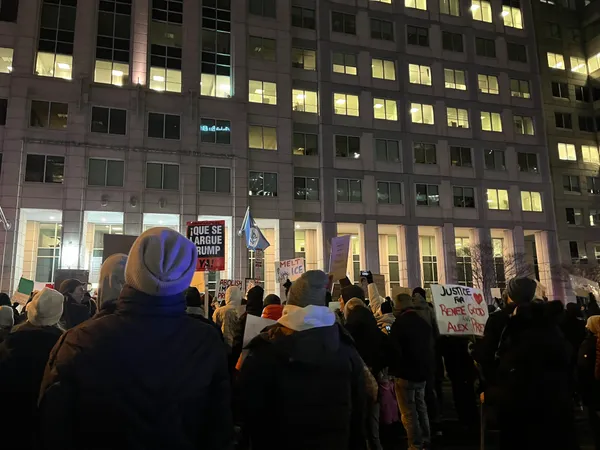
Anti-ICE demonstrations continued in Washington, D.C., and in multiple U.S. cities as public attention remained fixed on violence connected to immigration enforcement operations in Minneapolis. Protest actions in the nation’s capital included solidarity activity by some local businesses that temporarily closed and posted messages opposing federal immigration enforcement in their communities.
Organizers described the latest wave as a coordinated national day of action, with participants protesting Immigration and Customs Enforcement (ICE) activity and broader federal immigration enforcement. In Washington, some businesses closed for the day, citing community impacts and the desire to protest without gathering in the streets.
Minneapolis incidents remain central to the protests
The nationwide demonstrations have been fueled in part by high-profile incidents in Minneapolis tied to a federal immigration enforcement surge. Minnesota officials have mounted a legal challenge seeking to halt what they describe as an unprecedented buildup of federal Department of Homeland Security personnel, including ICE and Customs and Border Protection (CBP), conducting operations in the Twin Cities and elsewhere in the state.
The Minnesota lawsuit argues that the enforcement surge has caused immediate harms for residents and local governments, and asks the court for emergency relief. The legal action reflects a broader debate over federal authority, the scope of immigration enforcement tactics, and the boundaries of constitutional protections during enforcement operations.
Courts weigh limits on crowd-control tactics amid protests
Legal scrutiny has also expanded beyond Minnesota. In Portland, Oregon, a federal judge issued a temporary restraining order restricting federal officers from using chemical agents and certain “less-lethal” projectiles against people who pose no imminent threat of physical harm, and from aiming projectiles at the head, neck, or torso unless deadly force is legally justified. The order is set for a limited duration while the case proceeds.
The Portland ruling followed claims of injuries to protesters and journalists during demonstrations outside a federal immigration facility, part of a longer-running series of confrontations that have drawn local and national attention. Federal officials have defended their actions as necessary to protect officers, the public, and federal property.
What is known about the current protest landscape
- Protests have continued in Washington, D.C., alongside actions in other major cities.
- Some D.C.-area businesses have used temporary closures as a form of protest and solidarity.
- Minnesota state and local leaders have asked a federal court to halt the ongoing enforcement surge.
- Federal courts are actively assessing limits on chemical agents and projectile munitions at protest sites, including in Portland.
The current phase combines street demonstrations, business closures, and fast-moving court battles over enforcement tactics and constitutional boundaries.
Officials and advocates on different sides of the issue have continued to emphasize public safety, constitutional rights, and the practical consequences of intensified immigration enforcement. With litigation pending in multiple jurisdictions and demonstrations continuing, the next developments are expected to come both from court rulings and from changes in federal enforcement posture.